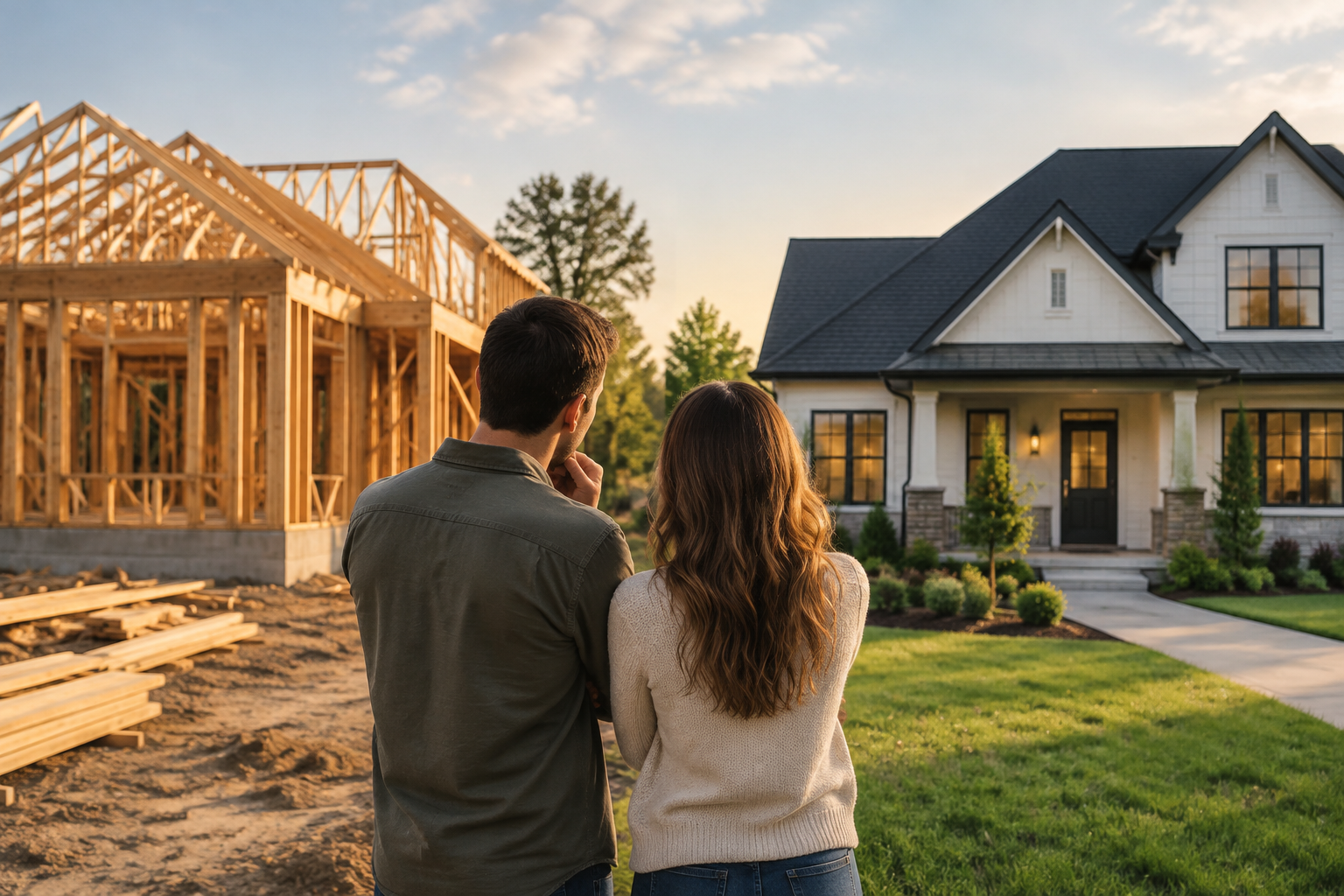
Deciding whether to build or buy a house is one of the biggest property decisions many people make. Neither option is automatically cheaper, easier or better. The right choice depends on your finances, priorities, location, available homes, tolerance for uncertainty and how much control you want over the finished property.
Buying usually offers a clearer path to moving in, although an existing home may need repairs, renovations or updates. Building can provide a home designed around your needs, but construction involves more decisions, a longer timeline and potential cost or scheduling changes.
This guide explains the main trade-offs and provides a practical framework for comparing the two options.
Build versus buy at a glance
| Factor | Building a house | Buying an existing house |
|---|---|---|
| Customization | High: you can influence the layout, finishes and features, subject to planning rules, budget and site limitations. | Limited unless you renovate, extend or remodel after purchase. |
| Move-in timing | Usually less predictable because it depends on design, approvals, construction and inspections. | Often more predictable, although the transaction and any repairs can still cause delays. |
| Budget certainty | Can be difficult to establish because site work, material changes and variations may affect the final cost. | Purchase price is generally known before completion, but renovation and maintenance costs still need to be assessed. |
| Maintenance | New systems and materials may reduce immediate repair needs, but no house is maintenance-free. | Depends heavily on the property's age, condition, inspection results and maintenance history. |
| Location | You need a suitable plot, and land may be unavailable or expensive in preferred areas. | You can choose from properties already located in established neighbourhoods, subject to availability. |
| Involvement | Requires frequent decisions and coordination with professionals, even when using a builder. | Usually involves fewer design decisions, but inspections, negotiations and repairs still require attention. |
Why building a house may be the better choice
You want a home designed for your lifestyle
Building may suit you if existing homes do not provide the layout, accessibility features, storage, energy systems or workspace you need. You can plan room sizes, circulation, bathrooms, kitchen placement and outdoor areas from the beginning.
Customization has limits. Your choices may be affected by the plot's shape, soil conditions, access, planning requirements, building regulations, utility connections and the construction budget.
You expect to stay for a long time
The time and effort involved in building may make more sense when you plan to remain in the property for many years. A long ownership period can allow you to benefit from a layout that fits your needs rather than compromising on an existing home.
This is not a guarantee of financial gain. Property values, demand, construction quality and resale preferences vary by location and market conditions.
You value modern specifications
A new home can be designed around current standards and your chosen systems, such as insulation, heating, cooling, ventilation, wiring, security and accessibility. It may also reduce the immediate need to replace outdated components.
New construction still requires inspection and quality control. Defects can occur, and a new property can have maintenance needs, warranty procedures or finishing work after completion.
You can manage uncertainty and decisions
Building may be appropriate if you have time to compare plans, specifications and contracts, make decisions promptly and respond to changes. It is not only a construction project; it is also a financial and administrative process.
Why buying an existing house may be the better choice
You need a more predictable move-in plan
Buying an existing property can be more suitable when you need to move by a particular date, for example because of work, school or a change in household circumstances. The timeline is not guaranteed, but it is generally easier to assess a completed home's condition than to predict every stage of a new build.
You prefer an established location
Existing homes are often available in neighbourhoods with established roads, public transport, schools, shops, services and community facilities. A new development may eventually offer similar amenities, but their availability and timing should be verified rather than assumed.
You want to compare the actual property
With an existing house, you can inspect the rooms, natural light, noise, storage, views, surrounding properties and street environment. You can also ask for information about alterations, maintenance and known defects, subject to local disclosure practices.
You want to avoid construction management
Buying may be preferable if you do not want to select finishes, coordinate professionals, monitor progress or deal with construction variations. You may still need to arrange surveys, inspections, repairs, insurance and legal or conveyancing work.
Comparing the full cost of building and buying
The most common mistake is comparing a construction quote only with the purchase price of an existing house. A meaningful comparison should include all costs required to own a usable home.
Potential costs when building
- Purchase of land or a plot
- Surveys, soil investigations and site assessments
- Design, architectural or engineering services
- Planning applications, permits, approvals and inspections where applicable
- Site preparation, demolition, excavation, drainage and foundations
- Utility connections and infrastructure charges
- Construction work and builder-related fees
- Materials, fixtures, appliances and finishes
- Driveways, fencing, landscaping and external structures
- Temporary accommodation, storage and moving costs
- Financing costs during the construction period
- Contingency for unexpected work or approved changes
- Professional advice, insurance, taxes and transaction costs that apply in your jurisdiction
Potential costs when buying
- Purchase price and deposit or down payment
- Mortgage, loan or other financing costs
- Inspection, survey, valuation and professional fees
- Taxes, registration charges and transaction costs where applicable
- Immediate repairs, replacements and renovations
- Appliances, furniture, moving and storage
- Insurance, property taxes or local charges
- Ongoing maintenance and major future repairs
- Renovation approvals and professional services if you alter the property
Ask for a written breakdown of inclusions and exclusions. A low construction quote may omit landscaping, appliances, utility connections, fixtures, design changes or site-related work. Likewise, a lower-priced existing home may require substantial repairs that are not obvious during a viewing.
Financing considerations
Financing a build can work differently from financing an existing property. Some lenders use staged payments or drawdowns as construction reaches agreed milestones. This can affect interest, documentation, inspections and cash-flow planning. A completed home purchase may use a more conventional mortgage structure, but requirements vary by lender and jurisdiction.
Before committing, ask a qualified lender or mortgage adviser:
- What deposit or down payment is required?
- How is the property's value assessed?
- How are construction funds released?
- What happens if the project takes longer than expected?
- Can the loan cover land, site work, professional fees and contingencies?
- What evidence of income, builder credentials, plans or permits is required?
- How could a change in interest rates affect affordability?
- What costs continue if you are paying for temporary accommodation while building?
Do not assume that a lender will approve a particular amount or that a construction budget will be accepted. Obtain independent, current advice based on your circumstances.
Time, stress and project risk
Building involves several linked stages: finding land, checking feasibility, preparing a design, obtaining approvals, arranging finance, selecting a builder, signing a contract, constructing the home and completing inspections. Delays at one stage can affect the others.
Common sources of uncertainty include weather, labour availability, material supply, changes to the design, unexpected site conditions, approval delays and disputes about work or payment. A detailed contract, realistic schedule, documented changes and regular communication can reduce risk, but they cannot remove it entirely.
Buying has different risks. A transaction may fall through, inspections may reveal defects, financing may not proceed, or the property may require more work than expected. A thorough inspection and review of available property documents can help identify issues before you commit.
How location changes the decision
Local conditions can determine whether building is practical. In one area, suitable plots may be scarce or expensive. In another, land may be available but require extensive grading, retaining walls, access work or new utility connections.
For an existing property, investigate matters such as flood or other environmental exposure, planning restrictions, access, boundaries, noise, nearby development proposals, heritage controls and the condition of local infrastructure. The relevant checks and terminology differ between jurisdictions.
Resale and long-term flexibility
A highly personalized home may be ideal for you but less attractive to future buyers. Unusual layouts, excessive customization or expensive features may not be fully reflected in resale value. On the other hand, poor design, deferred maintenance or outdated systems can affect the appeal of an existing property.
Consider whether the home can adapt to likely changes, such as working from home, children leaving or joining the household, mobility needs or caring responsibilities. Flexibility may be more valuable than a large number of decorative upgrades.
A practical decision process
- Set a sustainable budget. Base it on your income, existing debts, deposit, emergency savings and likely ongoing costs, not only the maximum a lender may offer.
- Define your non-negotiables. List location, number of bedrooms, accessibility, outdoor space, commute, schools or services, energy preferences and timing.
- Test the build option. Check land availability, planning feasibility, utilities, site conditions, professional fees and realistic construction costs.
- Test the buy option. Compare suitable homes and estimate immediate repairs, renovation costs, maintenance and transaction expenses.
- Use comparable totals. Compare the complete cost of a usable built home with the complete cost of an existing home ready for your intended use.
- Allow a contingency. Keep funds for unexpected costs and avoid committing every available dollar to the project or purchase.
- Seek independent advice. Depending on the situation, this may include a mortgage professional, surveyor, building inspector, architect, engineer, lawyer or conveyancer.
- Choose based on risk as well as price. The cheapest estimate may not be the best option if it creates an unaffordable timeline or leaves important work uncovered.
Questions to ask before building
- Is the land suitable for the proposed house and legally accessible?
- Are water, electricity, drainage, gas or other services available, and who pays for connection?
- What approvals are required?
- Does the builder's contract clearly describe the scope, specifications, payment schedule, variations and completion process?
- Which items are excluded from the quote?
- How will delays, defects and disputes be handled?
- What insurance, warranties or consumer protections apply locally?
- Where will you live during construction, and what is the backup plan if the schedule changes?
Questions to ask before buying
- What is the property's structural and general condition?
- How old are the roof, heating, cooling, plumbing, electrical and other major systems?
- Are there signs of damp, movement, pests, poor drainage or unapproved alterations?
- What repairs are urgent, and what can wait?
- Are boundaries, rights of way, permits and title or ownership records clear?
- Are there planning proposals, restrictions or environmental risks affecting the property?
- What are the likely running costs and maintenance obligations?
- Does the purchase remain affordable if rates, taxes, insurance or repair costs change?
Which option is cheaper?
There is no universal answer. Building may appear less expensive when the comparison excludes land, site work, professional fees, external works, temporary housing and financing costs. Buying may appear more expensive upfront but require significant renovation after completion.
Compare written estimates for the same standard of accommodation and include both one-time and ongoing costs. Also consider the value of your time, the cost of delays and the financial consequences of having funds tied up during a build.
Frequently asked questions
Is building a house always more expensive than buying one?
No. The result depends on land costs, site conditions, design, specifications, labour, local property prices, financing and the condition of available existing homes. A careful comparison must include all project and ownership costs.
Is buying an older house a bad idea?
Not necessarily. Older homes may offer established locations, character and renovation potential. They may also have ageing systems, maintenance issues or restrictions. A professional inspection and realistic repair budget are important.
How long should I plan to stay if I build?
There is no fixed period that makes building worthwhile. The longer you expect to stay, the more opportunity you may have to benefit from a suitable layout and spread certain costs over time, but this is not a guarantee that building will produce a better financial result.
Can I build a house without managing the project myself?
Often, builders or project managers can coordinate much of the work, depending on the contract. You will still need to understand the agreement, approve key decisions, monitor progress and respond to issues. Confirm exactly what the professional is responsible for.
Should I get a property inspection on a newly built house?
Independent inspections can help identify incomplete work or defects, even when the property is new. The appropriate inspections and available protections depend on local rules and the contract.
What is the best choice for a first-time buyer?
There is no single best choice. Buying may be simpler for someone who values a clearer timeline and fewer construction decisions. Building may suit someone with a suitable plot, a strong preference for customization and enough financial capacity to manage uncertainty.
Bottom line
Build if customization, a long-term plan and control over the design are especially important to you and you can manage construction risk. Buy if timing, location, cost visibility and avoiding project management matter more.
Before deciding, compare complete budgets, verify the property or site, stress-test your finances and obtain professional advice suited to your jurisdiction. A decision that is affordable and manageable is generally more important than choosing the option that looks cheapest at first glance.
Disclaimer: This article provides general information, not financial, mortgage, legal, tax, construction or property advice. Rules, costs, lending criteria, inspections, contracts, taxes and consumer protections vary by jurisdiction and individual circumstances. Obtain advice from appropriately qualified local professionals before making a property or financing commitment.