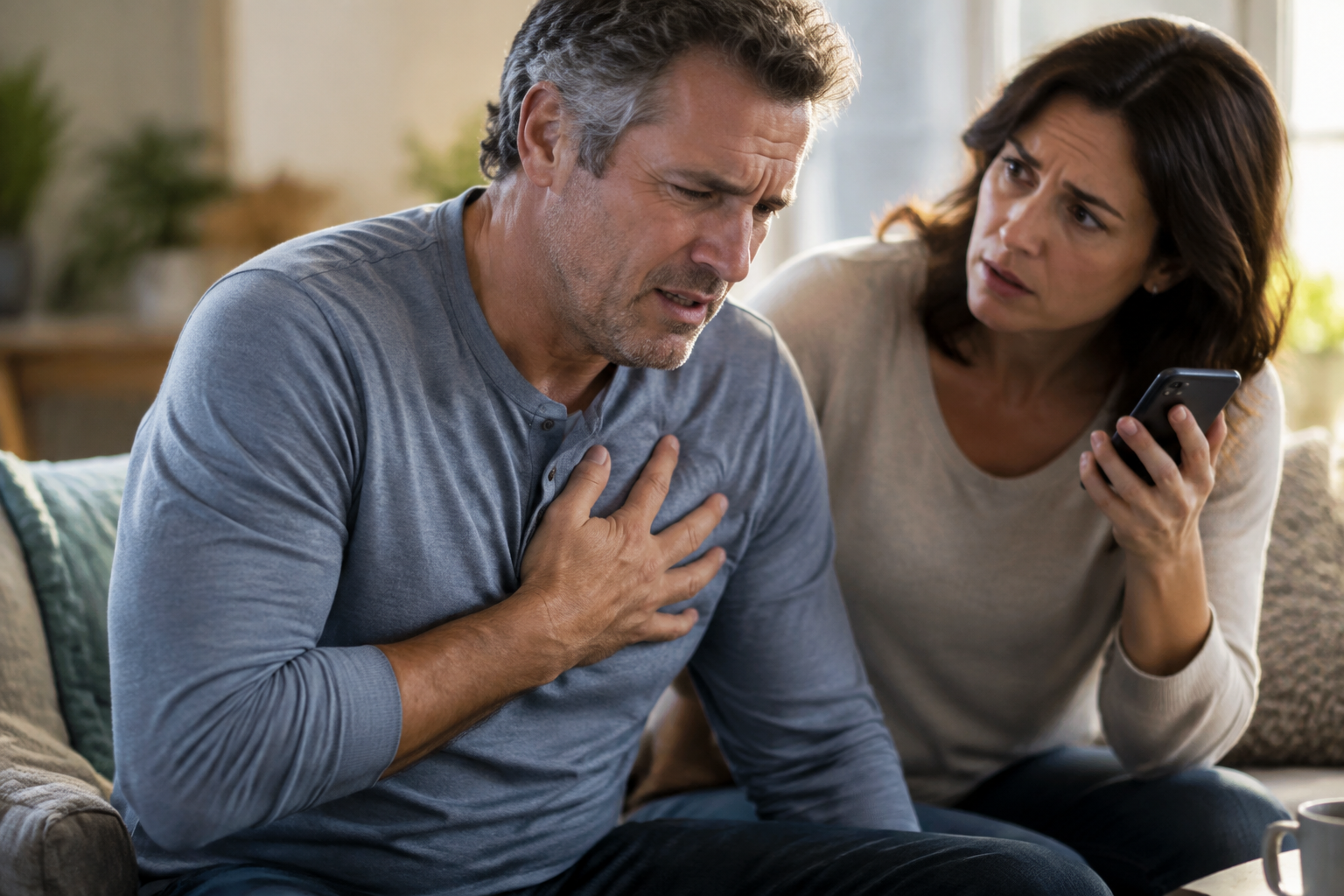
A heart attack happens when blood flow to part of the heart muscle is blocked or severely reduced. It is a medical emergency. The sooner treatment begins, the better the chance of limiting heart damage.
Symptoms vary from person to person. Some people have intense chest pain, while others experience milder discomfort, unusual tiredness, shortness of breath, nausea, or pain in another part of the body. Do not wait for symptoms to become severe before seeking help.
Common signs of a heart attack
Possible symptoms include:
- Chest discomfort: Pressure, squeezing, fullness, tightness, heaviness, burning, or pain in the center or left side of the chest. It may last more than a few minutes, come and go, or return after temporarily improving.
- Pain or discomfort elsewhere: Symptoms may spread to one or both arms, the shoulders, back, neck, jaw, or upper abdomen.
- Shortness of breath: This can occur with or without chest discomfort.
- Cold sweating: Unexplained clamminess or sweating may occur.
- Nausea, vomiting, or indigestion-like discomfort: These symptoms can sometimes be mistaken for a stomach problem.
- Dizziness or light-headedness: A person may feel faint, weak, or unsteady.
- Unusual fatigue: Marked or unexplained tiredness can be a warning sign, particularly when it occurs with other symptoms.
- Palpitations or a sense of an abnormal heartbeat: These may occur in some cases.
Symptoms may be different for different people
Not everyone experiences the classic pattern of crushing chest pain. Women, older adults, and people with diabetes may be more likely to have less typical symptoms, such as shortness of breath, nausea, back or jaw discomfort, unusual weakness, or fatigue. However, anyone can have atypical symptoms, and no single symptom reliably rules out a heart attack.
A heart attack can also start slowly with mild discomfort. Symptoms may develop during activity or at rest. They may be triggered by exertion, but they can also occur without an obvious cause.
When to call emergency services
Call your local emergency number immediately if you or someone else has possible heart attack symptoms, especially chest discomfort lasting more than a few minutes or symptoms that keep returning. Call even if you are not sure. Emergency dispatchers can advise you while help is sent.
Do not drive yourself to the hospital. An ambulance crew may be able to begin assessment and treatment during transport, and the person can deteriorate suddenly. If an ambulance is unavailable, have someone else drive you and do not travel alone if another option exists.
What to do while waiting for help
- Stop activity and sit or lie in a comfortable position with the upper body supported.
- Keep the person calm and stay with them.
- Unlock the door and gather a list of medicines, allergies, and relevant medical information if it can be done without delay.
- Follow the emergency operator's instructions.
- Ask whether chewing aspirin is appropriate. Aspirin is not suitable for everyone, including some people with an allergy, active bleeding, or specific medical conditions, and local guidance may differ. Do not delay the emergency call to look for it.
- If the person becomes unresponsive and is not breathing normally, call emergency services, begin CPR if you are able, and use an automated external defibrillator if one is available and you know how to use it. Follow the device's prompts.
Heart attack or cardiac arrest?
A heart attack is a circulation problem caused by reduced blood flow to heart muscle. Cardiac arrest is an electrical problem in which the heart stops pumping effectively. A heart attack can lead to cardiac arrest, but they are not the same condition.
Someone in cardiac arrest is usually unresponsive and not breathing normally, or is only gasping. This requires immediate CPR and use of an automated external defibrillator when available, alongside an emergency call.
Decision factors: when not to wait
Seek emergency help rather than monitoring symptoms at home when:
- Chest pressure, pain, tightness, or burning is new, unexplained, or persistent.
- Symptoms spread to the arm, back, neck, jaw, or upper abdomen.
- Chest discomfort occurs with shortness of breath, sweating, nausea, dizziness, faintness, or unusual weakness.
- Symptoms occur in someone with known heart disease or risk factors such as high blood pressure, diabetes, high cholesterol, smoking, or a strong family history.
- You are unsure whether symptoms are heartburn, anxiety, muscle pain, or a heart problem.
It is safer to have potentially serious symptoms assessed urgently than to assume they have a harmless cause. Emergency clinicians can determine what is happening; symptoms alone cannot do so reliably.
Practical questions to consider
- When did the symptoms begin? Note the time and whether they are continuous or intermittent.
- What does the discomfort feel like? Describe pressure, squeezing, burning, stabbing, heaviness, or another sensation.
- Where is it located, and does it move? Mention any spread to the arms, back, neck, jaw, or abdomen.
- What other symptoms are present? Report breathlessness, sweating, nausea, weakness, dizziness, or fainting.
- Does movement or rest change it? This information may help clinicians, but improvement with rest does not rule out a heart attack.
- What medicines and medical conditions are relevant? Have this information ready, but do not delay the emergency call to collect it.
What not to do
- Do not wait to see whether severe symptoms disappear.
- Do not dismiss symptoms as indigestion, stress, or muscle strain without medical assessment when a heart problem is possible.
- Do not drive yourself if emergency transport is available.
- Do not take someone else's prescription heart medicine.
- Do not give food or drink to a person who is unconscious or having difficulty swallowing.
Frequently asked questions
Can a heart attack happen without chest pain?
Yes. Some people have shortness of breath, nausea, sweating, fatigue, dizziness, or pain in the back, jaw, arm, or upper abdomen without obvious chest pain. These symptoms still need urgent assessment when they are new, severe, or unexplained.
Can heart attack symptoms come and go?
Yes. Symptoms may come and go or improve temporarily. That does not make them safe to ignore. Call emergency services if symptoms return or remain concerning.
Is heartburn the same as a heart attack?
No. Heartburn and a heart attack can feel similar, and it is not always possible to distinguish them based on sensation alone. New or unexplained chest discomfort should be treated as an emergency until evaluated.
Can a young or physically fit person have a heart attack?
Yes. Although risk generally increases with age and certain health conditions, a heart attack can affect younger adults and people who appear healthy.
Should I take aspirin if I think I am having a heart attack?
Ask the emergency dispatcher or follow local emergency guidance. Aspirin may be inappropriate for people with an allergy, active bleeding, or certain medical conditions. Never delay calling for help, and do not take it instead of seeking emergency care.
What if the symptoms go away?
Temporary improvement does not rule out a heart attack or another serious condition. Contact emergency services or obtain urgent medical assessment, particularly if the symptoms were new or involved chest discomfort, breathlessness, faintness, or spreading pain.
Key takeaway
Possible heart attack symptoms include chest pressure or discomfort, shortness of breath, sweating, nausea, dizziness, unusual fatigue, and pain in the arm, back, neck, jaw, or upper abdomen. When a heart attack is possible, call your local emergency number immediately and follow the operator's instructions.
Disclaimer: This article provides general health information, not a diagnosis or personal medical advice. Emergency procedures and medication guidance can vary by country and individual circumstances. If symptoms may indicate a heart attack, contact local emergency services now.