Tesla ownership in 2026 should be assessed as a complete transport decision rather than simply a choice between electric and petrol power. The right vehicle depends on your daily mileage, access to charging, climate, passenger and cargo needs, insurance costs, software expectations and how long you plan to keep the car.
This guide is designed for buyers and current owners who want a structured way to evaluate Tesla vehicles during the 2026 model year. It does not assume that a particular model, price, incentive, feature or delivery timetable is available in every country. Tesla specifications, local inventory, financing offers, charging access, tax treatment and regulations can change, so confirm current details from official sources before committing.
What to evaluate before choosing a Tesla
1. Your charging situation
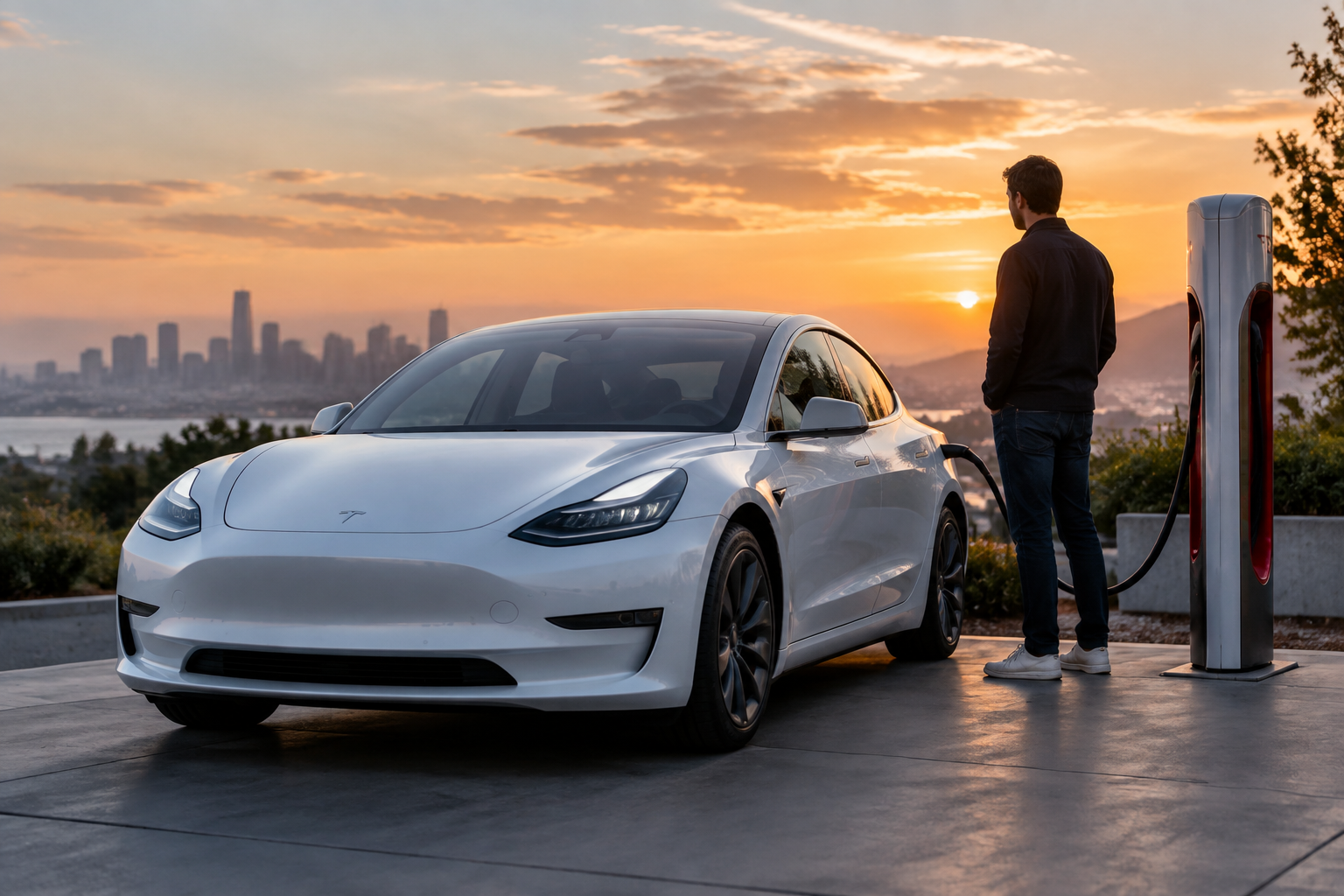
Home charging is one of the most important factors in the ownership experience. If you can regularly charge at home or at work, an electric vehicle may be more convenient because routine charging can happen while the car is parked. If you rely mainly on public chargers, compare local coverage, opening hours, payment methods, reliability and pricing rather than looking only at the vehicle's advertised range.
Before buying, check whether your parking space has a suitable electrical supply, whether installation requires permission, and whether the building or landlord has restrictions. A qualified electrician should assess the installation. Apartment residents may need a written agreement about equipment ownership, electricity billing and future removal.
2. Driving range in real conditions
Published range figures are test results, not guarantees for every journey. Actual range can be affected by speed, temperature, wind, hills, traffic, tyre pressure, payload, heating and air conditioning. Cold weather can have a noticeable effect on energy use, particularly on short trips where the battery and cabin need to warm up.
For a fair comparison, estimate your normal weekly mileage and identify the longest regular journey. Then consider how much reserve you want at the destination and whether dependable charging is available along the route. Buyers who frequently tow, drive at high motorway speeds or travel in very cold conditions should use a larger planning margin.
3. Vehicle size and use case
Tesla's range of cars and SUVs may suit different needs, but availability and specifications vary by market and production period. Compare vehicles using practical measurements, not just model names:
- Number of adults and child seats you regularly carry
- Boot and storage space for your normal loads
- Access height and seating position
- Turning circle and parking dimensions
- Ground clearance for your roads and driveway
- Towing or roof-load requirements, if relevant
- Visibility and ease of loading
Take child seats, luggage or work equipment to a test drive if they are central to your decision. A vehicle that appears spacious in photographs may not suit your particular combination of passengers and cargo.
Tesla 2026 ownership costs
The purchase price is only one part of the budget. Build a total-cost estimate that includes the following:
- Vehicle price and delivery-related charges shown in your market
- Financing interest, deposit and any end-of-term payment
- Home-charging equipment and electrical work
- Public charging fees
- Insurance premiums and policy excesses
- Tyres, repairs, inspections and routine servicing
- Vehicle taxes, registration or road-use charges
- Depreciation and expected resale value
- Optional connectivity, software or convenience subscriptions
- Winter equipment or accessories where needed
Electric cars can have different maintenance needs from combustion vehicles, but that does not mean they are maintenance-free. Tyres, brakes, suspension components, windscreen damage, air-conditioning systems and other ordinary vehicle items may still require attention. Follow the maintenance and inspection guidance applicable to the vehicle and your jurisdiction.
Insurance deserves early attention
Obtain insurance quotations before ordering. Premiums can vary substantially according to driver history, location, annual mileage, repair networks, vehicle specification, security arrangements and claims history. Ask whether the policy covers charging cables, glass, battery damage, vehicle software or replacement-car needs. These are general questions, not a substitute for reviewing the policy wording or obtaining professional advice.
Charging: home, work and public networks
Home charging
Home charging is usually most useful when the car is parked for several hours. The appropriate equipment depends on the vehicle, local electrical standards, property type and available supply. Do not choose equipment solely on maximum advertised power; the practical result also depends on the car's onboard charging capability and the home's electrical capacity.
Ask an installer to explain:
- Expected charging speed under normal conditions
- Whether the installation needs an upgraded supply or protective equipment
- How electricity use will be measured
- What happens if you move house
- Warranty, maintenance and fault-support arrangements
Public charging
For longer trips, compare more than the number of charging sites. Check connector compatibility, charging speed, site availability, accessibility, payment options, idle fees and whether the location is practical when travelling with children or luggage. A route with several slower chargers may be more useful than one with a single high-power site if reliability and access are better.
Charging performance can vary with battery temperature, state of charge, vehicle configuration and site conditions. Treat estimated charging times as planning guidance rather than a fixed promise.
Software and driver-assistance features
Tesla vehicles rely heavily on software for displays, navigation, energy planning, remote controls and driver-assistance functions. Software updates may add, change or remove functions, and the exact feature set can depend on the vehicle, hardware, country and regulatory approval.
Driver-assistance systems should not be confused with a fully autonomous vehicle. The driver remains responsible for supervising the vehicle wherever required by law and by the manufacturer's instructions. Before relying on a feature, understand its limitations, operating conditions, alerts and handover requirements. Marketing names do not replace the vehicle manual or local traffic rules.
When comparing a Tesla with another vehicle, ask whether a desired feature is included, optional, subscription-based, restricted by location or dependent on future software. Avoid treating a promised future capability as a benefit that is available today.
Buying new, used or leasing
Buying new
A new vehicle may offer the latest available hardware, a full manufacturer warranty and a simpler configuration process. However, prices, incentives and delivery estimates can change. Read the order terms carefully, including cancellation rights, payment timing, delivery conditions and any restrictions on changing the order.
Buying used
A used Tesla can offer a lower entry price, but investigate the specific vehicle rather than relying on the model's general reputation. Check:
- Vehicle identification number and ownership history
- Accident, flood, salvage or structural-repair records
- Battery and charging performance
- Tyre condition and alignment
- Brake, suspension and steering condition
- Evidence of water leaks or damaged seals
- Remaining vehicle, battery and drive-unit warranty
- Whether included features transfer to the next owner
- Availability of keys, cables and accessories
- Outstanding finance, liens or registration issues
Arrange an independent inspection where practical. A diagnostic check and road test can reveal issues that are not obvious from appearance or a short seller demonstration.
Leasing or financing
Compare the total amount payable, not just the monthly figure. Review the deposit, interest rate, fees, mileage allowance, wear-and-tear rules, early-termination terms, end-of-term options and responsibility for insurance and maintenance. A low monthly payment may reflect a longer term, a larger final payment or a mileage limit.
Battery health and long-term ownership
Battery capacity naturally changes with use and age, but the rate can differ between vehicles and operating conditions. Owners should follow the manufacturer's charging guidance rather than attempting to preserve the battery through extreme routines. Avoid making a purchase decision based on an unsupported battery-life promise.
For a used vehicle, review available energy-consumption information, charging behaviour and warranty terms. Ask the seller whether the car has experienced charging faults, prolonged storage, accident damage or replacement of high-voltage components. If the seller cannot answer basic questions, treat that uncertainty as part of the buying risk.
Safety, comfort and everyday usability
Safety ratings and equipment should be checked for the exact market and model year because test protocols and standard equipment can differ. Consider active safety alerts, child-seat compatibility, visibility, lighting, emergency procedures and the ease of using essential controls.
Also assess comfort on the journeys you actually make. Road noise, ride quality, seat support, climate-control performance, screen-based controls and access to physical controls can matter more over several years than a short test drive suggests.
Practical questions to ask before ordering
- Can I charge reliably where the car is parked overnight?
- What will insurance cost for this exact trim and driver profile?
- What is the total cost over my planned ownership period?
- What happens to my budget if electricity, insurance or financing costs rise?
- Will the car fit my passengers, child seats, luggage and parking space?
- How much range do I need in my coldest or most demanding conditions?
- Are the software and driver-assistance features I want available now in my country?
- Which features require an additional payment or subscription?
- What warranty applies to the vehicle, battery and drive unit?
- How easy will it be to obtain repairs, tyres, glass and bodywork locally?
- Would a comparable electric vehicle better suit my charging network or service needs?
- For a used car, can I independently verify its history and condition?
Common mistakes to avoid
- Using the headline range as a guaranteed real-world distance
- Ordering before checking insurance and home-charging feasibility
- Comparing monthly payments without calculating total repayment
- Assuming every software feature works in every country or vehicle
- Ignoring tyre, bodywork and glass-repair costs
- Buying a used car without checking warranty transfer and accident history
- Assuming public charging will always be available at the fastest advertised speed
- Treating driver assistance as autonomous driving
FAQs
Is a Tesla a good choice in 2026?
It can be, particularly for drivers who have dependable charging, value a software-focused vehicle and can manage the total ownership cost. It may be less suitable for someone without practical charging access, someone who needs specialised local servicing, or someone whose priorities are low purchase cost and predictable resale value. The answer depends on the individual vehicle, market and use case.
How much does a Tesla cost in 2026?
There is no single global figure. Prices vary by model, configuration, country, taxes, delivery charges, incentives and time of purchase. Use the official local configurator or retailer information for the current price, then add insurance, charging, financing and ownership costs.
Are Tesla charging costs cheaper than petrol or diesel?
They may be lower when most charging is done at a favourable home electricity rate, but the result depends on energy prices, vehicle efficiency, public-charging fees and the comparable petrol or diesel vehicle. Calculate cost per kilometre using your own tariffs and driving pattern.
Can a Tesla drive itself?
Do not assume that any Tesla is fully autonomous. Driver-assistance capabilities, names, availability and legal permissions vary. The driver must follow local law, remain attentive and be ready to take control whenever required.
Should I buy a new or used Tesla?
New may provide newer equipment and clearer warranty coverage, while used may reduce the purchase price. A used vehicle requires more careful checks of battery condition, accident history, warranty status, included features and repair needs. Compare the full financial and practical risks of both options.
What is the most important Tesla buying question?
For many buyers, it is whether they can charge reliably and affordably where the vehicle is normally parked. If that answer is uncertain, resolve it before comparing trims or optional features.
Bottom line
A sensible Tesla decision in 2026 requires more than checking range or monthly finance. Confirm charging access, obtain insurance quotes, calculate total ownership costs, test the vehicle with your real passenger and cargo needs, and verify the exact software, warranty and regulatory position in your market. Compare alternatives on the same basis, and treat changing prices, incentives and future features as uncertainties rather than guarantees.
Disclaimer: This article provides general consumer information, not financial, legal, tax, insurance, electrical or automotive advice. Prices, specifications, warranties, incentives, charging rules and driver-assistance regulations vary by country and can change. Check official Tesla documentation, local authorities, your insurer, lender and a qualified electrician or professional adviser before making a purchase or installation decision.