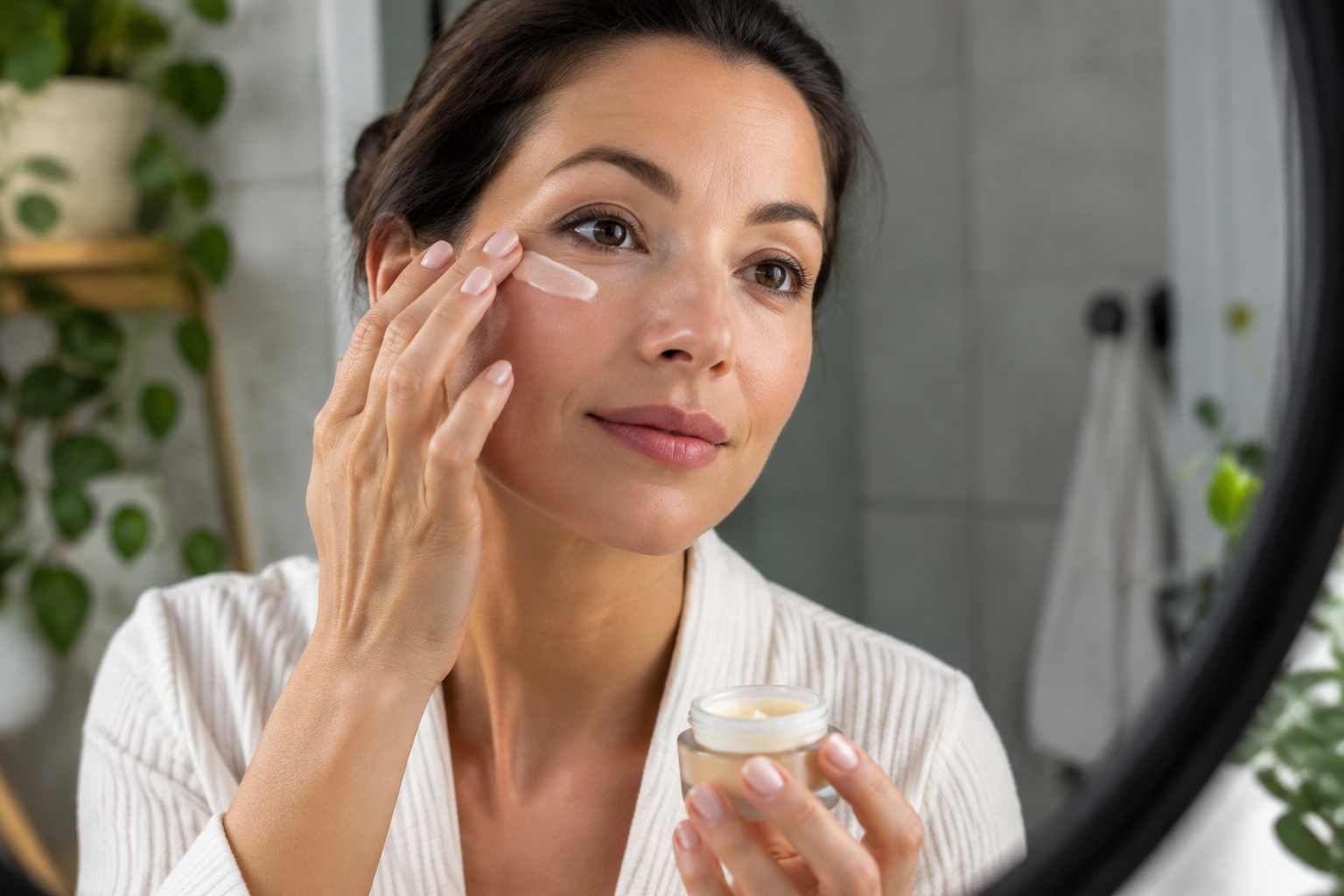
There is no single eye cream that is best for everyone. The skin around the eyes can be more prone to dryness and irritation than other areas of the face, while concerns such as puffiness, dark circles and fine lines can have very different causes. A good choice starts with identifying your main concern, then checking the formula, packaging and tolerability.
Eye creams are not essential for every routine. In many cases, a gentle facial moisturiser may be suitable for the eye area if its label allows that use and it does not cause stinging. Eye products can still be useful when you want a lighter texture, a targeted ingredient or a formula designed with the eye area in mind.
Quick guide: choosing an eye cream
- Dryness or tightness: Look for humectants and barrier-supporting moisturisers such as glycerin, hyaluronic acid, ceramides, squalane or shea butter.
- Puffiness: Consider a lightweight, cooling formula. Caffeine is commonly included in products marketed for the appearance of puffiness, although results may be temporary and vary.
- Dark circles: First consider whether the darkness appears brown, blue or purple, or is caused partly by shadows from hollowness. Brightening ingredients may help the appearance of some types of discolouration, but no cream can address every cause.
- Fine lines: Moisturising ingredients can make dry lines look less noticeable. Retinoids and certain antioxidant ingredients may be used in some anti-ageing formulas, but they can irritate sensitive skin and require careful use.
- Sensitivity: Choose a short ingredient list, avoid fragrance if it tends to irritate you and introduce one new product at a time.
What makes an eye cream effective?
Effectiveness depends on the specific concern, the concentration and stability of the ingredients, the product’s texture and whether you can use it consistently without irritation. A high price does not automatically mean a product will work better, and a product labelled “eye cream” is not necessarily more effective than a well-tolerated facial moisturiser.
1. Moisturising ingredients
Dryness can make the eye area feel uncomfortable and can emphasise the appearance of fine lines. Humectants such as glycerin and hyaluronic acid help attract water to the outer layers of the skin. Emollients and occlusive ingredients, including squalane, dimethicone and shea butter, can help reduce moisture loss and improve softness. Ceramides are used in some formulas to support the skin barrier.
If your eyelids are oily or prone to tiny bumps, a rich balm may feel uncomfortable. In that case, a lighter lotion or gel may be easier to use.
2. Caffeine and cooling ingredients
Caffeine is frequently used in products intended for the appearance of puffiness. A cool applicator or chilled product may also make the area feel refreshed. These effects should not be confused with a permanent change to the underlying cause of puffiness, which may include genetics, sleep disruption, allergies, fluid retention or the natural structure of the eye area.
3. Brightening ingredients
Ingredients such as niacinamide, vitamin C derivatives and certain botanical extracts may be included in products for dullness or uneven-looking tone. Their suitability depends on the exact formula and your skin’s tolerance. Some dark circles are influenced by pigmentation, while others are related to visible blood vessels, thin skin or shadows from the shape of the eye socket. A topical product may have limited benefit when the main cause is structural.
4. Retinoids and other line-focused ingredients
Retinoid-based products are commonly used in skincare routines focused on fine lines and texture. The eye area can be particularly sensitive, so a product intended for this region and a gradual introduction may be preferable to applying a strong facial retinoid close to the eyes. Follow the product directions and avoid getting it in the eye.
Peptides and antioxidants also appear in many eye products. They may support a cosmetic anti-ageing routine, but marketing language can overstate what a product can achieve. Look for clear instructions and realistic claims rather than promises of dramatic or permanent transformation.
How to choose the best eye cream for your concern
For dry or dehydrated skin
Choose a fragrance-free moisturising formula with ingredients such as glycerin, ceramides, hyaluronic acid, dimethicone or squalane. Apply a small amount to clean, slightly damp skin if the product instructions permit it. If the area remains persistently dry, cracked or itchy, consider whether another product in your routine is causing irritation.
For puffiness
A light gel or serum may be more comfortable than a rich cream. Caffeine is a common ingredient to look for, and a gentle cooling applicator may improve the user experience. Avoid rubbing or massaging forcefully, particularly if the area is swollen or irritated.
For dark circles
Try to identify the appearance of the darkness before buying. Brown-toned discolouration may call for a gentle brightening-focused product, while blue or purple tones may be less responsive to topical products. Sunscreen and sunglasses can help reduce exposure to ultraviolet light, which may worsen uneven pigmentation. If dark circles appear suddenly, affect one side, or occur with swelling or other symptoms, seek medical advice rather than relying on cosmetics.
For fine lines and mature skin
Prioritise daily moisturisation and daytime sun protection. If you choose a retinoid or another potentially irritating active, begin with occasional use and follow the label. Do not combine several strong actives around the eyes at once. Visible improvement, when it occurs, generally requires consistent use over time rather than a single application.
For sensitive or allergy-prone skin
Look for a simple, fragrance-free formula and be cautious with essential oils, exfoliating acids and high-strength retinoids. “Natural” does not necessarily mean non-irritating. Patch-test according to the product directions, although a small-area test cannot guarantee that a product will not irritate the eyelids.
How to apply eye cream safely
- Cleanse your face gently and pat the skin dry.
- Use a very small amount—usually less than a pea for both eyes, unless the label says otherwise.
- Apply with a clean finger along the orbital bone or other area specified by the instructions.
- Keep the product out of the eyes and avoid applying it directly to the waterline or very close to the lashes.
- Use the ring finger or a light tapping motion if that feels comfortable; do not tug the skin.
- Apply sunscreen during the day, taking care not to get it in the eyes.
Stop using the product if it causes persistent burning, swelling, rash, watering or changes in vision. Rinse the eye with clean water if product enters it and irritation continues. Seek prompt medical care for severe pain, vision changes, marked swelling or signs of an allergic reaction.
Eye cream buying checklist
- Target concern: Does the product address your main issue, or is it making broad promises?
- Ingredient profile: Are the key ingredients appropriate for your skin and goal?
- Tolerability: Is it fragrance-free or otherwise suitable if you are sensitive?
- Texture: Will you actually enjoy using the cream in your routine?
- Packaging: An opaque, well-sealed container can be useful for formulas containing light- or air-sensitive ingredients.
- Directions: Can you follow the recommended frequency and application area?
- Value: Compare the amount of product and the formula, not just the size or marketing claims.
- Consistency: Choose a product you can use regularly without discomfort.
Practical questions to ask before buying
Do I need a separate eye cream?
No. A suitable facial moisturiser may be enough for dryness if it can be used safely around the eyes. A separate eye cream may be worthwhile if you prefer its texture or want a formula designed around a specific concern.
Should I choose a cream, gel or serum?
Choose based on comfort and skin type. Creams and balms tend to feel more nourishing, while gels and serums are often lighter. The format itself does not determine effectiveness; the complete formula matters more.
Can eye cream remove dark circles?
It may improve the appearance of some types of pigmentation or dryness, but dark circles have multiple possible causes. Structural shadows, visible blood vessels and inherited features may not respond substantially to topical skincare.
Can I use facial retinol around my eyes?
Not automatically. Facial retinol products can be too irritating for the eye area, and the product label may specifically advise avoiding it. If you want to use a retinoid near the eyes, consider professional guidance or a product formulated and labelled for that area.
How long should I try an eye cream?
Allow enough time to judge comfort and gradual cosmetic changes, while following the product directions. Stop sooner if you develop irritation. Take photographs in similar lighting if you want to compare changes more objectively.
Frequently asked questions
Is expensive eye cream better?
Not necessarily. Price can reflect packaging, branding, texture and ingredient choices, but it does not guarantee better results. A reasonably priced product that suits your skin and is used consistently may be a better choice than an expensive formula that irritates you.
Can eye cream cause milia?
Small white bumps around the eyes can have several causes. Some people find that very rich products make them more noticeable, although a product is not necessarily the sole cause. If bumps persist or you are unsure what they are, ask a qualified healthcare professional rather than trying to remove them yourself.
Is fragrance-free eye cream always best?
Fragrance-free products can be a sensible option for sensitive skin because fragrance may contribute to irritation for some people. However, fragrance-free does not mean irritation-free, and the rest of the formula still matters.
Can I use eye cream on my eyelids?
Only if the product directions indicate that it is suitable for the eyelids. The eyelid skin is delicate, and products can migrate into the eyes. Apply sparingly and stop if you experience irritation.
Should I apply eye cream before or after moisturiser?
Follow the product instructions. As a general routine, apply lighter products before heavier moisturisers, but there is no universal order that suits every formula. Avoid layering multiple potentially irritating products around the eyes.
Does eye cream replace sunscreen?
No. An eye cream does not replace broad-spectrum sun protection for exposed skin. Use sunscreen as directed and consider sunglasses and a hat for additional protection, while avoiding contact with the eyes.
Bottom line
The best eye cream is one that matches your main concern, contains ingredients you tolerate and fits easily into your routine. Start with moisturisation and sun protection, introduce targeted actives cautiously and keep expectations realistic. If you have ongoing irritation, sudden changes around the eyes or concerns about a medical condition, consult a dermatologist, pharmacist or other qualified healthcare professional.
Disclaimer: This article provides general skincare information, not medical advice, diagnosis or treatment. Products and ingredient guidance can vary by country and individual circumstances. Check the product label and seek professional advice for persistent symptoms, allergies, pregnancy-related questions or use around a diagnosed eye condition.