Hybrid vs. Full Electric: Which Is Better for You?
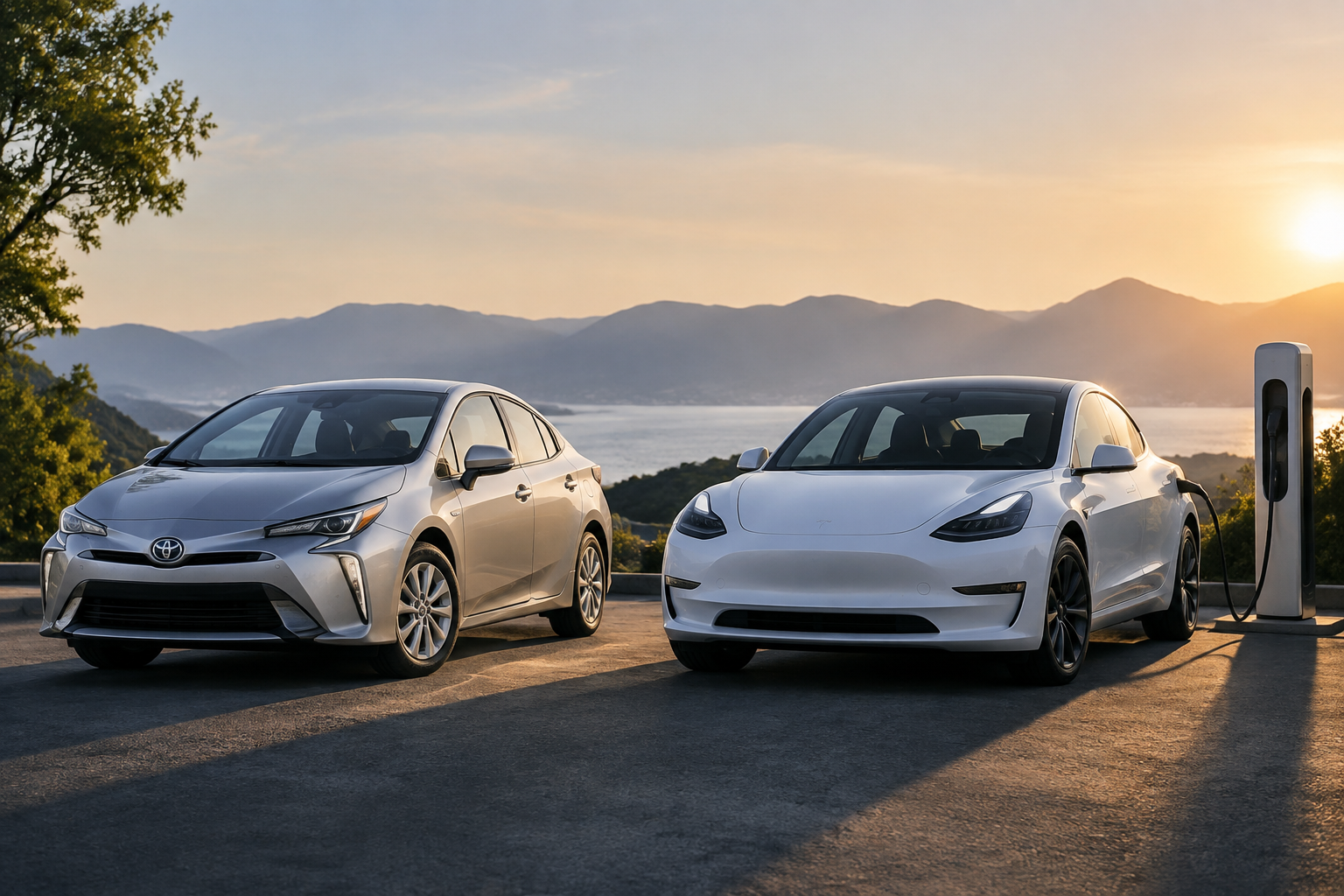
Hybrid and full-electric vehicles can both reduce petrol or diesel use, but they suit different drivers. A hybrid combines an internal-combustion engine with one or more electric motors. A full-electric vehicle, also called a battery-electric vehicle or BEV, uses electricity only and has no petrol or diesel engine.
The better option depends less on the badge and more on how you drive. A full electric car can be especially convenient and efficient when you can charge at home or work. A hybrid may be more practical when charging is difficult, journeys are unpredictable or you want to refuel in a familiar way.
This guide compares the two technologies across the factors that usually matter most, including purchase cost, running costs, range, charging, maintenance, environmental considerations and long-distance travel.
Hybrid and full-electric cars explained
What is a hybrid car?
A conventional hybrid has a petrol or diesel engine, a battery and an electric motor. It can often use electric power for short periods, particularly at low speeds, but the engine remains an important source of propulsion. The battery is generally recharged through regenerative braking and by the engine rather than by plugging the car into a charger.
A plug-in hybrid, or PHEV, has a larger battery that can be charged from an external power source. It may complete some shorter journeys using electricity alone, then use its engine when the battery is depleted or when extra power is needed. Its real-world benefits depend heavily on how regularly it is charged and how far it is driven in electric mode.
What is a full-electric car?
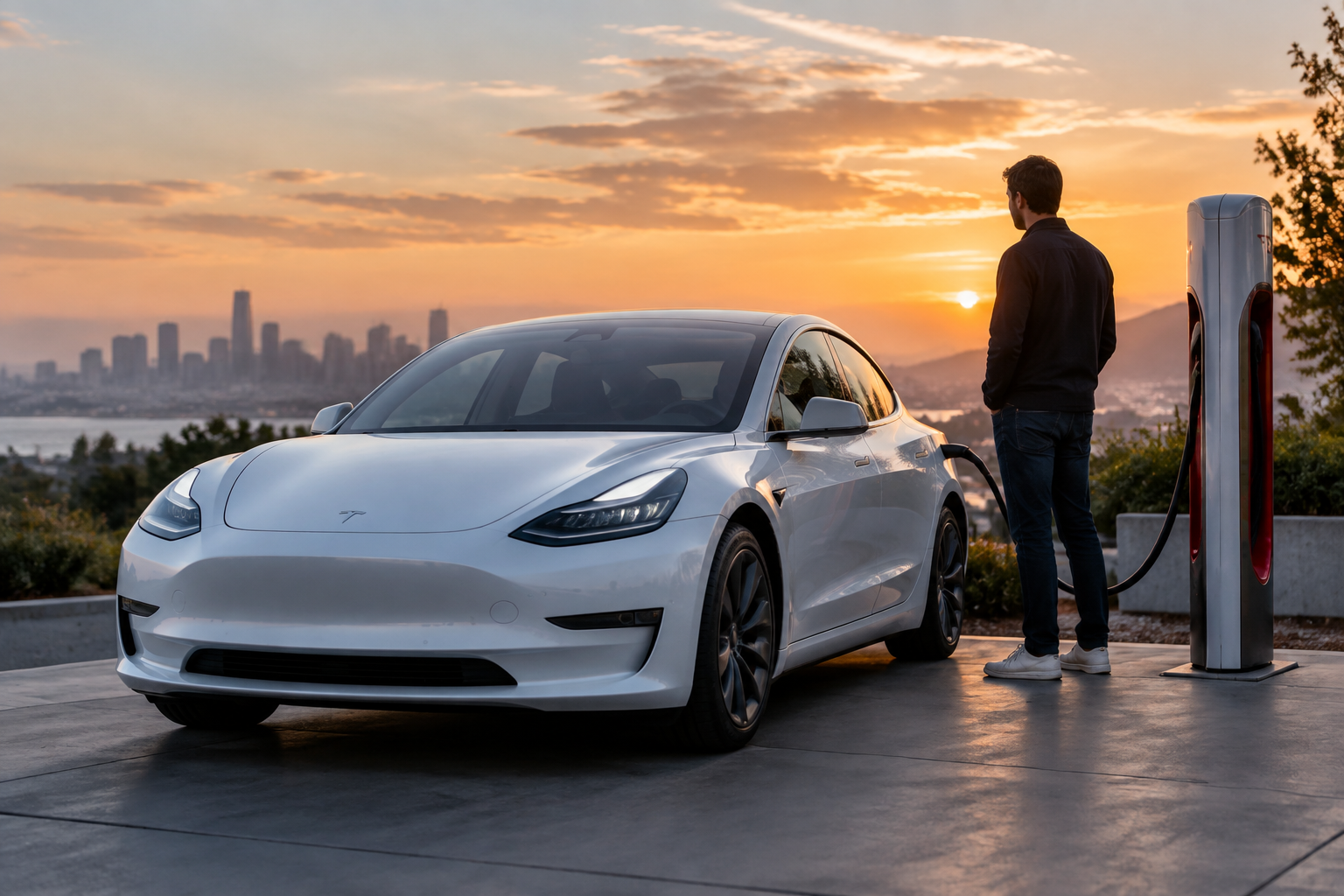
A full-electric car is powered entirely by one or more electric motors. It stores energy in a larger battery and must be recharged using a home charger, workplace charger or public charging network. It does not need petrol or diesel, and it has no conventional engine, exhaust system or engine oil.
Quick comparison
| Factor | Hybrid | Full electric |
|---|---|---|
| Energy source | Fuel, with electric assistance | Electricity only |
| Refuelling or charging | Usually refuels at a fuel station; a plug-in hybrid also needs charging for best results | Charges from a home, workplace or public charger |
| Long journeys | Usually straightforward because refuelling is quick and widely available | Requires route planning around charging, although the exact experience varies by vehicle and charging network |
| Local driving | Can use electric assistance, but a conventional hybrid cannot usually travel far on electricity alone | Often well suited to regular local journeys, provided charging is available |
| Mechanical complexity | Has both an engine and an electric drivetrain | Has fewer major moving drivetrain components, but still includes complex battery, software and electrical systems |
| Tailpipe emissions | Produces exhaust emissions when the engine runs | Has no tailpipe emissions while driving |
Where hybrids may be the better choice
You cannot charge conveniently
If you park on the street, live in a building without suitable charging or have no reliable workplace option, a hybrid can remove the need to plan around charging. This is particularly relevant for people who want some electrification without changing their current refuelling routine.
Your journeys are long, irregular or difficult to predict
A hybrid can be useful when your driving pattern includes frequent long trips, remote destinations or sudden changes in plans. You can generally refuel using the existing fuel-station network rather than relying on a compatible public charger at a particular location.
You want a gradual transition
A hybrid can provide electric assistance and regenerative braking while preserving the familiarity of an engine. It may be a sensible transitional choice for drivers who are interested in electrification but are not yet comfortable with charging logistics.
You are considering a plug-in hybrid
A plug-in hybrid may suit a driver whose daily journeys are short enough to complete mostly on battery power, but who regularly needs an engine for longer trips. However, this only works as intended if the vehicle is charged consistently. If it is rarely plugged in, carrying both powertrains can reduce the practical benefit.
Where a full-electric car may be the better choice
You can charge at home or work
Convenient charging can change the ownership experience. Instead of making separate trips to refuel, you may be able to recharge while the car is parked. The exact charging time depends on the vehicle, charger, battery size, temperature and state of charge.
Most of your driving is predictable
Full-electric cars are often easiest to live with when daily distances are reasonably consistent and you can begin trips with an adequate charge. This does not mean an EV is limited to short journeys, but longer travel requires more planning than a conventional car or hybrid in many areas.
You want to avoid petrol or diesel use
A full-electric car does not burn fuel while driving. This can make it attractive to people who want to reduce dependence on petrol or diesel, avoid tailpipe emissions and use an electric drivetrain exclusively. Overall environmental impact also depends on factors such as vehicle manufacture, battery production, electricity generation, vehicle size and how long the car is used.
You prefer quiet, smooth acceleration
Electric motors deliver power differently from engines. Many drivers value the quiet operation and smooth, immediate response of an EV, although individual preferences vary and vehicle design has a significant influence on the experience.
Cost: look beyond the purchase price
The cheapest option to buy is not necessarily the cheapest to own. Compare the full cost over the period you expect to keep the vehicle.
Upfront price
Prices vary substantially by brand, size, specification, battery capacity and local market. Do not assume that every hybrid is cheaper than every full-electric car, or that a higher purchase price will automatically be recovered through fuel savings. Compare like-for-like vehicles and check whether a quoted price includes charging equipment, delivery fees, taxes or optional features.
Energy costs
Compare your likely electricity and fuel use using local tariffs and fuel prices. Home charging may be less expensive per mile than petrol or diesel in some circumstances, but the result depends on electricity rates, charging losses, public-charging fees, fuel prices, driving style, weather and vehicle efficiency. Public charging can cost more than home charging and may have separate connection, parking or subscription charges.
Maintenance and repairs
A full-electric car does not require conventional engine-oil changes and has fewer engine-related components. It still needs tyres, brakes, suspension, fluids, software updates and safety inspections. Hybrid vehicles require maintenance for both their electric systems and their engine-related components. Service schedules and repair costs differ by model, so check the manufacturer’s maintenance plan and warranty terms rather than relying on general assumptions.
Depreciation and finance
Resale values and finance costs can vary with model reputation, battery warranty, mileage, supply, demand and changes in the market. When comparing monthly payments, examine the total amount payable, deposit, interest, contract mileage, end-of-term conditions and any charging costs. General comparisons cannot predict the finance approval or future value of a particular vehicle.
Range, charging and long-distance travel
Range is not a single fixed number
Advertised range is produced under a standard test procedure. Real-world range can be affected by speed, temperature, heating or air conditioning, road gradient, payload, tyre pressure, driving style and battery condition. Use the manufacturer’s information as a comparison tool, not a guarantee for every journey.
Charging speed matters as much as battery size
Two EVs with similar battery capacities may have different charging performance. Check the vehicle’s maximum AC and DC charging rates, the charging curve, connector type, battery preconditioning and whether the public chargers on your usual routes support those capabilities. A large battery is not automatically the most convenient choice if charging access is limited.
Consider your parking situation
Before choosing an EV or PHEV, answer practical questions: Can a cable reach your parking space safely? Are you allowed to install a charger? Will you need permission from a landlord, building manager or local authority? What will you do when the charger is occupied or unavailable? If the answers are uncertain, a conventional hybrid may be less disruptive.
Plan for occasional journeys
If most of your driving is local but you take occasional long trips, an EV may still work well. Assess the actual routes rather than imagining the worst case. Identify charging stops, allow time for detours and consider whether you are comfortable arriving with a lower battery reserve. If this sounds stressful or your routes have limited charging, a hybrid may provide greater convenience.
Driving in cold or challenging conditions
Low temperatures can reduce the usable range of an EV and may increase energy consumption because the car must heat the cabin and battery. Heavy loads, high speeds, hills and towing can also have a significant effect. Hybrid vehicles can be affected by weather and load as well, although their fuel-refuelling process may make range management feel more familiar.
Anyone who regularly drives in very cold weather, mountainous areas or with a trailer should examine independent tests, manufacturer guidance and owner documentation for the specific model. Do not base a decision only on the vehicle’s headline range or power figure.
Environmental considerations
A full-electric car has no tailpipe emissions while driving, but manufacturing the vehicle and battery has environmental impacts. Electricity generation also affects the emissions associated with charging. A hybrid continues to use fuel and produce tailpipe emissions when its engine operates, although its electric system can reduce fuel consumption in suitable conditions.
The fairest comparison considers the whole period of ownership: vehicle size, manufacturing, electricity mix, fuel consumption, mileage, maintenance, battery life and eventual recycling. Driving less, choosing an appropriately sized vehicle and keeping a car in service for longer can also affect overall impact. Environmental performance is a broad assessment, not a promise attached to every vehicle carrying a particular label.
Safety, practicality and everyday usability
Safety should be assessed using the specific vehicle’s independent safety ratings, standard equipment and driver-assistance systems. Hybrid and electric powertrains are not substitutes for checking crash performance, visibility, child-seat compatibility, boot space and reliability history.
Battery placement can create a low centre of gravity, but it can also affect cabin or luggage design. Check whether the boot accommodates your normal shopping, sports equipment, pram or pet. Also consider the vehicle’s turning circle, ground clearance, towing rating and roof-load limit if these matter to you.
A practical decision framework
- Record your normal driving. Estimate your weekday distance, annual mileage, longest regular trip and number of journeys that exceed your expected electric range.
- Audit charging access. Identify home, workplace and dependable public-charging options. Include installation, parking rules, access hours and likely costs.
- Compare total ownership cost. Include purchase or finance cost, insurance, tax where applicable, energy, servicing, tyres, charging equipment and expected resale value.
- Test the real use case. Take a test drive with the passengers and equipment you normally carry. Check visibility, seating, boot space, controls and ride comfort.
- Stress-test the difficult journeys. Consider winter travel, holidays, towing, traffic, remote destinations and trips when chargers may be busy.
- Choose the compromise you can live with. The best car is usually the one that fits your routine without requiring constant workarounds.
Questions to ask before buying
- Where will the vehicle be parked overnight?
- Can I charge at home, work or a dependable public location?
- How much of my regular driving could be completed electrically?
- How often do I make journeys longer than the vehicle’s comfortable real-world range?
- What are the vehicle’s AC and DC charging limits?
- How does cold weather affect the model’s range and charging?
- What warranty applies to the battery and other high-voltage components?
- What servicing is required, and which costs are excluded from the service plan?
- Will the vehicle tow what I need, carry my passengers and fit my parking space?
- What happens if I cannot charge at home or a public charger is unavailable?
Hybrid vs. full electric: the short answer
Choose a hybrid if you lack reliable charging, frequently make unpredictable or long journeys, or want electrification without changing your refuelling habits. A plug-in hybrid is most compelling when you can charge regularly and your daily trips fit its electric range.
Choose a full-electric car if you have dependable charging, mostly predictable driving and are comfortable planning occasional longer trips. It may offer a quieter driving experience and simpler routine energy use, but it requires more attention to charging access and journey planning.
If you are undecided, compare one suitable hybrid and one suitable EV using your actual weekly mileage, local energy prices, parking arrangements and longest regular journeys. That comparison will usually be more useful than choosing based on general claims about either technology.
FAQs
Is a hybrid better than an electric car for long journeys?
It can be more convenient when charging options are limited or journeys are unpredictable because refuelling is usually familiar and widely available. An EV can also handle long journeys, but you need to plan charging stops and allow for variables such as weather, traffic and charger availability.
Is a plug-in hybrid better than a full electric car?
Neither is universally better. A plug-in hybrid can offer electric driving for suitable daily trips and an engine for longer journeys. A full EV has a simpler propulsion system and produces no tailpipe emissions, but depends more on charging access. A PHEV’s benefits are greatest when it is charged consistently.
Are electric cars cheaper to run?
They can be, but the result depends on purchase or finance cost, electricity and fuel prices, charging location, insurance, servicing, tyres, mileage and depreciation. Home charging may produce a different result from frequent use of paid public chargers. Calculate your own expected costs.
Do electric cars need less maintenance?
They generally do not need engine-oil changes and have fewer conventional engine components. They still need routine inspections and maintenance for tyres, brakes, suspension, fluids, software and high-voltage systems. Requirements vary by model and market.
Does an EV become impractical without home charging?
Not necessarily, but ownership may be less convenient and potentially more expensive if you depend on public chargers. Check the availability, reliability, opening hours and pricing of chargers near your home, workplace and regular routes before buying.
Which type has better resale value?
Resale value depends on the specific model and market conditions, including battery warranty, mileage, condition, demand and new-vehicle pricing. No general rule can guarantee which powertrain will retain more value.
Should I buy a hybrid or EV for occasional driving?
For low annual mileage, compare purchase cost and ownership expenses carefully. A hybrid may be convenient if you do not have charging access. An EV may still suit you if it can be charged easily and your vehicle’s standing energy use, insurance and purchase cost make sense for your budget.
Disclaimer
This article provides general consumer information, not personal financial, tax, legal, insurance or technical advice. Vehicle specifications, incentives, charging rules, energy prices, warranties and ownership costs vary by country, region, provider and model. Verify current details with the manufacturer, charger operator, insurer, lender and relevant local authorities before making a purchase.