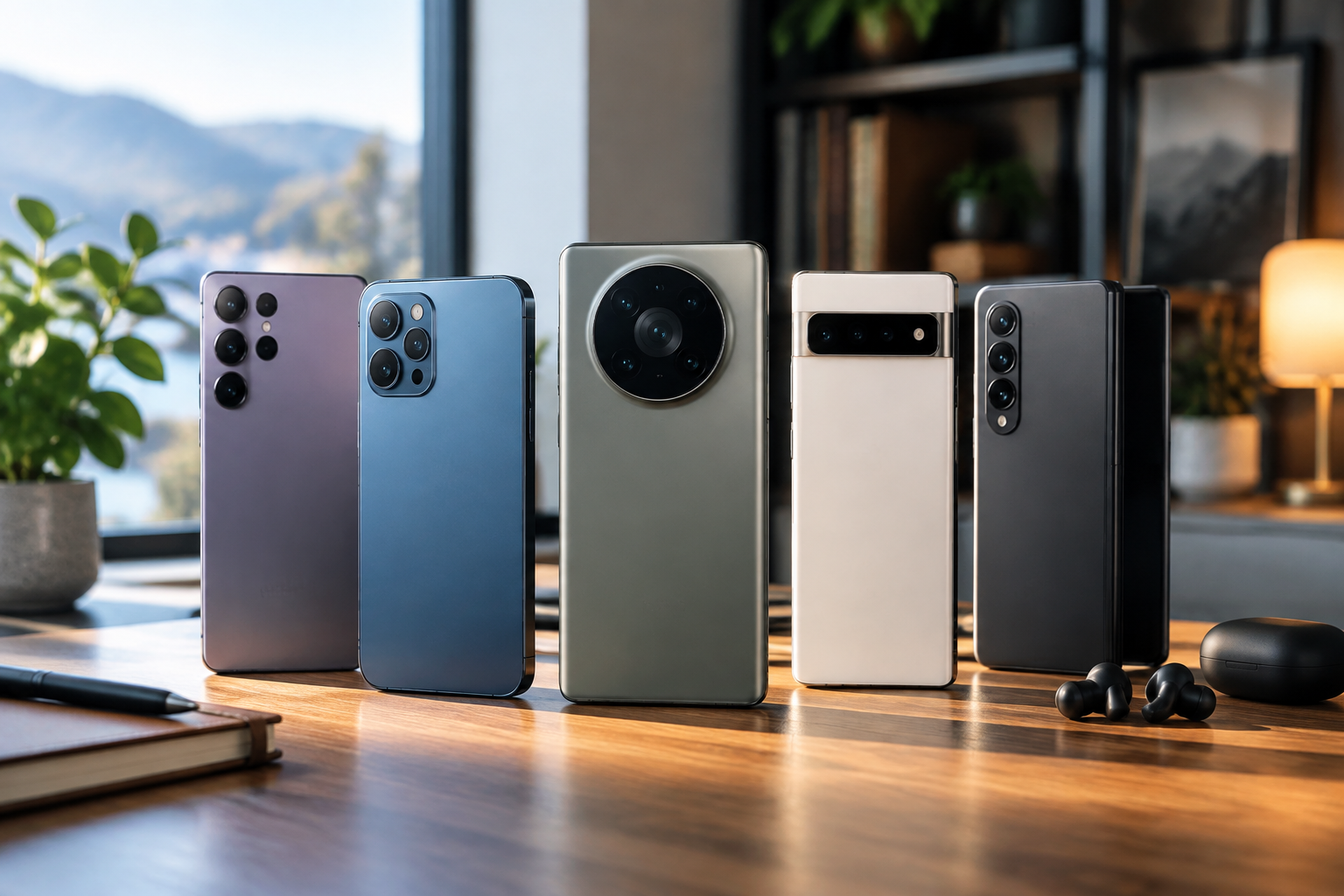
Choosing among the best smartphones can be difficult because phones increasingly share similar features. Premium models may offer advanced cameras and displays, while less expensive phones can provide excellent everyday performance. The right choice depends on how you use your phone, how long you plan to keep it and which compromises you are willing to accept.
This guide provides a practical framework for comparing smartphones without relying on a single specification or a temporary product ranking. Models, prices, availability and software policies change, so verify current details with the manufacturer or retailer before buying.
Quick answer: what makes a smartphone “best”?
A good smartphone should match your priorities in several areas:
- Reliability: It should perform consistently for calls, messages, apps and other daily tasks.
- Software: The operating system should feel comfortable and receive security updates for an appropriate period.
- Battery life: It should last through your typical day, with charging features that suit your routine.
- Camera performance: It should produce the types of photos and videos you actually take, including in difficult lighting if that matters to you.
- Durability: The design, screen protection, water resistance and repair options should fit your lifestyle.
- Value: The total cost should make sense over the years you expect to use the phone.
There is no universally best smartphone. A compact phone may suit someone who values one-handed use, while a large model may be better for reading, gaming or video. A camera-focused phone may not be the best option for someone who mainly wants long battery life and dependable software support.
Start with the operating system
iOS
Apple’s iPhone range uses iOS. It may be a strong fit if you already use other Apple devices, value a consistent interface or want close integration with Apple services and accessories. iPhones are available in several sizes and price tiers, but features vary by model and generation.
Android
Android phones are made by many manufacturers and cover a broad range of prices, sizes and designs. Android can be a good choice if you want more hardware variety, extensive customization or close integration with Google services. The user experience, update policy and included features can differ significantly between manufacturers.
How to choose between them
Consider the devices and services you already use. Switching platforms may require moving data, buying different accessories or learning a new interface. If you depend on a particular messaging service, smartwatch, tablet, cloud-storage plan or work application, check compatibility before purchasing.
Decision factors that matter most
1. Performance and processor
Processor specifications can help compare phones, but they do not tell the whole story. For normal use—web browsing, messaging, navigation, streaming and social media—many current phones are sufficiently responsive. More demanding users should pay closer attention to sustained performance, memory, storage speed and thermal management.
Choose a higher-performance phone if you regularly edit video, play demanding games, use advanced photography tools or keep many applications open. Otherwise, spending more on a flagship processor may produce little noticeable benefit.
2. Battery life and charging
Battery capacity is only one part of battery life. Screen size, display brightness, network conditions, processor efficiency, camera use and background applications all affect endurance. Independent testing can be useful, but your own routine matters most.
Ask whether you need:
- A phone that comfortably lasts a full day of heavy use.
- Fast wired charging for short charging sessions.
- Wireless charging for convenience.
- Power sharing or other charging features.
- A readily available replacement battery or repair service.
Fast charging speeds vary by phone and charger. Confirm what is included in the box and whether a compatible charger must be purchased separately.
3. Camera quality
Do not judge a camera solely by megapixel counts or the number of lenses. Image processing, sensor size, stabilization, autofocus, lens quality and software all influence results.
Think about your most common subjects:
- People and pets: Look for reliable autofocus, natural skin tones and good motion handling.
- Night scenes: Check low-light detail, noise control and stabilization.
- Travel and landscapes: An effective ultrawide camera and useful zoom can matter more than extreme resolution.
- Video: Consider stabilization, microphone quality, recording options and how easily you can edit or share clips.
- Selfies and video calls: Camera placement, image quality and lighting performance may be more important than rear-camera specifications.
When comparing sample images, use photos taken in similar conditions. Manufacturer demonstrations may not represent ordinary use.
4. Display
Display size affects comfort, portability and battery use. A larger screen can make reading and video more enjoyable, while a smaller phone may be easier to carry and operate with one hand.
Also compare resolution, refresh rate, brightness, color calibration and screen technology. A higher refresh rate can make scrolling feel smoother, but it may affect battery consumption depending on how the phone manages it. If you use your phone outdoors, practical brightness and glare control may matter more than resolution.
5. Storage
Choose enough storage for your photos, videos, applications, downloads and offline media. Operating-system files and applications occupy part of the advertised capacity, and storage needs often grow over time.
Cloud storage can help, but it may involve recurring fees and does not replace having enough local space for everyday use. Some Android phones support removable storage, while many phones do not, so check before buying.
6. Software updates and longevity
Software support can have a major effect on long-term value. Check how long the manufacturer promises operating-system updates and security updates, when that period begins, and whether all models receive the same treatment.
Longer support can make a more expensive phone worthwhile if you plan to keep it for several years. Also consider repairability, battery replacement options and the availability of parts or authorized service in your region.
7. Durability and design
Look for features that suit your environment, such as water and dust resistance, a sturdy frame, a comfortable grip and a screen that is reasonably protected against scratches and drops. Water resistance is not a guarantee against all liquid damage, and protective ratings may depend on testing conditions.
A case and screen protector can reduce everyday damage, but they add bulk. If you use a rugged case, check that it does not interfere with wireless charging, buttons or camera access.
8. Connectivity and compatibility
Confirm support for the mobile networks and bands used by your carrier. Depending on your location, you may also want dual-SIM support, eSIM, Wi-Fi features, Bluetooth compatibility, NFC and modern positioning systems.
Imported or region-specific models may lack certain network bands, services or warranty coverage. Buying from an authorized seller can reduce these risks, although policies vary by country.
Best smartphone types by user
Best for everyday use
Look for dependable performance, a good display, reliable battery life, sufficient storage and a clear software-update policy. You may not need the most powerful processor or the largest camera system.
Best for photography
Prioritize camera consistency rather than headline specifications. Compare main, ultrawide and telephoto cameras, low-light results, autofocus, portrait rendering and video quality. Check whether the camera app is quick and easy to use.
Best for gaming
Consider sustained performance, thermal management, display responsiveness, battery capacity, charging speed and storage. A comfortable grip and suitable speakers can matter during long sessions. Performance may decline as a device heats up, so short benchmark results do not tell the entire story.
Best for battery life
Choose a phone with efficient hardware, a suitable display and strong real-world endurance tests. A large battery alone does not guarantee the longest use. Charging speed and charger availability are also important if you frequently recharge during the day.
Best compact smartphone
Compare the phone’s physical dimensions, weight, screen usability and battery capacity. Compact models can be easier to carry, but they may provide less room for a large battery, cooling system or advanced camera hardware.
Best value smartphone
Focus on the complete ownership period rather than the initial price. A less expensive phone with short software support, limited storage or poor repair options may cost more to replace sooner. Compare warranty terms, update commitments, camera performance and everyday responsiveness.
Best phone for work
Check compatibility with work applications, email, authentication tools, document services and virtual meeting platforms. Security features, update support, dependable connectivity and easy file sharing may be more important than camera specifications.
How to compare smartphone prices fairly
Compare like with like. A phone’s advertised price may exclude a charger, case, storage upgrade or carrier commitment. Consider:
- The unlocked purchase price and any financing cost.
- Trade-in conditions and whether the quoted value depends on a specific plan.
- The cost of accessories you need.
- Warranty coverage and repair costs.
- Cloud-storage or subscription charges.
- Expected useful life and software support.
Discounts and availability change frequently. Read the terms carefully, especially when a promotion requires a carrier plan, trade-in, installment agreement or limited redemption period.
A practical smartphone-buying checklist
- Write down your three most important needs.
- Set a total budget, including accessories and possible service costs.
- Choose an operating system based on your existing devices and services.
- Check size, weight and ergonomics in person if possible.
- Review independent battery and camera tests.
- Confirm storage capacity and network compatibility.
- Read the manufacturer’s update and warranty information.
- Check return, repair and replacement policies before purchase.
- Compare the final price from authorized sellers.
- Buy only after confirming that the phone solves your actual problems.
Questions to ask before buying
- How many years do I expect to keep this phone?
- Do I need a high-end camera, or is a reliable main camera enough?
- Will the phone fit comfortably in my hand, pocket or bag?
- How much local storage do I need without relying on cloud services?
- Is the phone compatible with my carrier and existing accessories?
- What software and security support is promised in my market?
- Can I get an affordable battery replacement or repair?
- Does the final price include a charger and any required accessories?
- Would a previous-generation model meet my needs at a lower cost?
Common smartphone-buying mistakes
Buying based on one specification
A large battery, high megapixel count or fast processor does not guarantee a better overall experience. Evaluate the complete device.
Ignoring software support
A phone that appears inexpensive may offer weaker long-term value if it receives updates for a shorter period or has limited service options.
Choosing too much storage—or too little
Extra storage can be expensive, but running out of space is inconvenient. Review your current phone’s storage use before deciding.
Forgetting regional differences
Names, features, network compatibility, warranty terms and included accessories can vary by country or region.
Overlooking ergonomics
A phone can have excellent specifications but still be uncomfortable to hold, carry or use. Size and weight deserve practical attention.
FAQs
Is the most expensive smartphone automatically the best?
No. Premium phones often include more advanced hardware, but those features may not matter to every user. A less expensive model may be the better choice if it delivers the performance, camera quality, battery life and software support you need.
How much RAM does a smartphone need?
There is no single ideal amount for everyone. Everyday users should focus on real-world responsiveness and software optimization, while heavy multitaskers and gamers may benefit from more memory. Compare reviews of the specific model rather than relying only on the number.
How important is 5G?
Its usefulness depends on your carrier, location, plan and coverage. Check whether your local network supports the phone’s required bands and whether the expected benefits justify the cost.
Should I buy a new or refurbished smartphone?
A reputable refurbished phone can offer value, but check the seller’s grading system, battery condition, warranty, return policy, parts used in repairs and network compatibility. Conditions vary widely between sellers.
How often should I replace my smartphone?
Replace it when it no longer meets your needs, receives inadequate security support, has unacceptable battery degradation or would cost too much to repair. There is no universal replacement schedule.
Do I need a phone case and screen protector?
They are optional, but can help reduce damage from drops and scratches. Choose accessories that fit the exact model and do not interfere with charging, cameras, buttons or biometric sensors.
Final recommendation
To find the best smartphone for you, begin with your habits rather than a leaderboard. Decide which operating system fits your ecosystem, set a realistic total budget, identify the features you will use most and verify long-term support. Then compare a small shortlist using real-world reviews, warranty terms and regional compatibility. The best choice is the phone that remains dependable and comfortable throughout the period you plan to own it.
Disclaimer: This article is general consumer information, not personalized technical or financial advice. Product specifications, software-support policies, prices, availability, warranties and network compatibility vary by model and jurisdiction. Confirm current details with the manufacturer, carrier or authorized seller before purchasing.