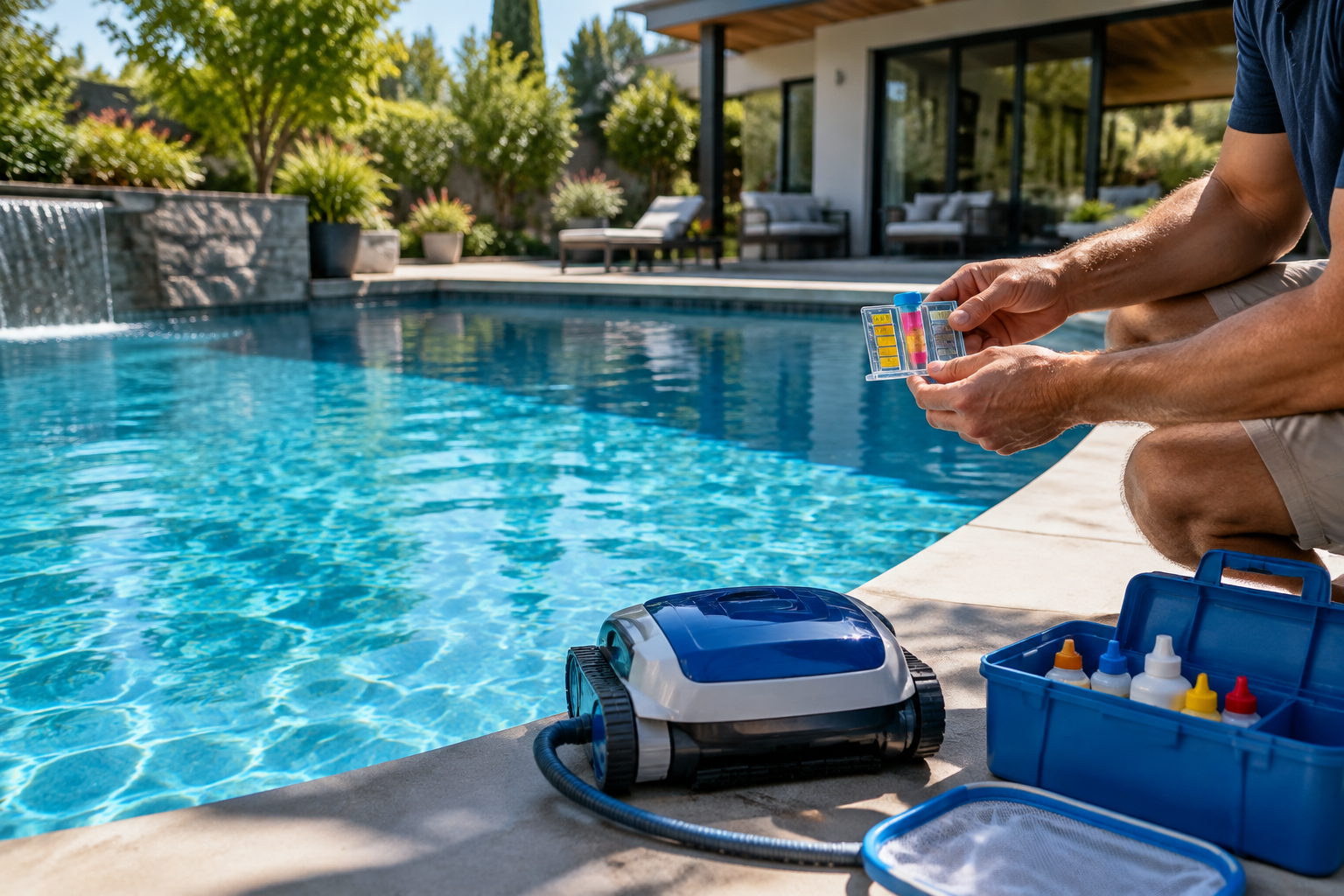
Swimming-pool maintenance is a combination of routine cleaning, water testing, equipment care, and timely problem-solving. A consistent schedule is usually more effective than waiting until the water turns cloudy, algae appears, or equipment stops working.
The exact maintenance requirements depend on the pool type, local climate, water source, bather load, sanitising system, and manufacturer instructions. Use this guide as general information, and follow the instructions supplied with your pool equipment and water-treatment products.
What pool maintenance involves
Most maintenance tasks fall into five areas:
- Water circulation: Running the pump and maintaining adequate flow through the filter.
- Water chemistry: Testing and adjusting sanitizer, pH, alkalinity, and other relevant measurements.
- Physical cleaning: Removing leaves, debris, dirt, and surface deposits.
- Equipment inspection: Checking the pump, filter, heater, lights, cleaner, valves, and plumbing for leaks or faults.
- Seasonal preparation: Adjusting the routine for hot weather, storms, heavy use, freezing conditions, or pool closure.
Set up a maintenance routine
A written checklist helps prevent small issues from becoming expensive repairs. The following schedule is a useful starting point, but it should be adapted to local conditions and the instructions for your system.
Tasks to perform frequently
- Remove leaves, insects, and other floating debris with a skimmer net.
- Check the water level. It should be high enough for the skimmer and circulation system to operate correctly, but not so high that the skimmer cannot remove surface debris efficiently.
- Look for unusual pump noise, visible leaks, air bubbles, or weak return flow.
- Test the water more often during periods of heavy use, very hot weather, major rainfall, or visible water-quality changes.
- Empty the skimmer basket when it is full or restricting flow.
Weekly tasks
- Brush the walls, steps, corners, and areas around fittings.
- Vacuum the floor or check that the automatic cleaner has operated properly.
- Test the main water-chemistry parameters using a suitable test kit or testing service.
- Clean or inspect the filter according to its type and the manufacturer’s instructions.
- Inspect the pool surround for standing water, slippery deposits, damaged surfaces, or trip hazards.
Monthly and occasional tasks
- Inspect equipment connections, seals, accessible pipework, and control panels.
- Check automatic dosing systems, salt systems, or monitoring sensors if installed.
- Review chemical usage and storage conditions.
- Clean scale or deposits using only products suitable for the pool surface and equipment.
- Arrange professional servicing for tasks that require electrical, gas, refrigeration, structural, or specialised water-treatment expertise.
Water chemistry: the core principles
Clear-looking water is not necessarily properly balanced. Regular testing helps you identify changes before they cause irritation, scale, corrosion, staining, or sanitizer failure.
Sanitizer
A sanitizer helps control microorganisms in the water. Common systems include chlorine-based products, bromine, and saltwater chlorine generators. A saltwater pool is still a chlorine pool: the generator produces chlorine from salt, so its output and water chemistry still need monitoring.
Use the sanitizer recommended for your system and test according to the product instructions. Do not mix different chemicals together, and never combine chemicals in the same container unless the manufacturer specifically permits it.
pH
pH affects sanitizer performance, swimmer comfort, and the risk of scale or corrosion. Test and adjust it within the range specified for your sanitizer and pool system. Add products carefully, allow the system to circulate as directed, and retest rather than making several unmeasured adjustments at once.
Total alkalinity
Total alkalinity helps resist rapid pH changes. If it is significantly out of the recommended range, pH may become difficult to control. Correcting alkalinity can require patience because one adjustment may affect pH and may need to be followed by further testing.
Calcium hardness and other tests
Calcium hardness can contribute to scaling when too high and may contribute to damage to some surfaces or equipment when too low. The appropriate level depends on the pool surface, water source, and treatment system. Some pools may also require testing for stabilizer, metals, salt concentration, or other parameters.
Use a reliable test method, check that strips or reagents have not expired, and take a water sample according to the test-kit instructions. If results are unexpected or contradictory, have the water tested by a qualified pool professional or reputable testing facility.
How to clean the pool
Skimming
Skimming removes debris before it sinks or reaches the filter. It also reduces the amount of organic material that can consume sanitizer. Pay particular attention after windy weather and before using the pool.
Brushing
Brush walls, steps, benches, corners, and behind ladders or fittings. These are common locations for dirt and algae to collect. Choose a brush appropriate for the pool surface: a brush that is suitable for concrete may damage some liners or delicate finishes.
Vacuuming
Vacuum manually or use an automatic cleaner. Before operating a suction-side or pressure-side cleaner, check that hoses, connections, baskets, and valves are configured correctly. Robotic cleaners generally have their own operating instructions and may require a separate filter or debris canister to be emptied.
Cleaning the waterline
Oily deposits and dirt can collect around the waterline, especially in heavily used pools. Use a pool-surface cleaner recommended for your finish. Avoid household products unless the pool or product manufacturer confirms that they are suitable, since some cleaners can affect water chemistry or damage surfaces.
Pool circulation and filtration
Good circulation distributes treated water and moves debris to the filter. Poor circulation can leave dead spots where algae or deposits develop even when test results appear acceptable.
- Keep skimmer and pump baskets clear.
- Check that return jets provide normal flow.
- Confirm that valves are in the correct position before starting the pump.
- Monitor the filter pressure or flow indicator if your system has one.
- Clean, backwash, rinse, or replace filter media only as directed for the filter type.
- Never open a pressurised filter or pump housing until the system has been switched off and pressure has been released according to the manufacturer’s procedure.
Running time is not identical for every pool. It depends on pump capacity, pool volume, plumbing design, water temperature, weather, bather load, and filtration method. Instead of copying a schedule from another pool, use the equipment manual and observe whether circulation, clarity, and test results remain stable.
Looking after pumps, heaters, and other equipment
Pump
A pump that is noisy, repeatedly losing its prime, leaking, or producing weak flow should be investigated promptly. Check simple causes such as a blocked basket or incorrect valve position, but stop the equipment if there is a serious leak, electrical concern, burning smell, or unusual mechanical noise.
Filter
Sand, cartridge, and diatomaceous-earth filters have different cleaning and servicing procedures. Do not substitute one procedure for another. Record cleaning dates and pressure readings so you can identify changes over time.
Heater
Keep the area around a heater clear and follow ventilation, clearance, and servicing requirements. Gas, electrical, and heat-pump equipment can present significant risks if incorrectly installed or repaired. Use a qualified technician for work beyond routine owner checks.
Automatic dosing and monitoring systems
Automation can reduce routine effort, but it does not eliminate maintenance. Sensors need calibration or replacement at intervals specified by the manufacturer, dosing containers need checking, and the water should still be independently tested from time to time. A faulty sensor can cause a system to add too much or too little chemical.
Choosing pool-maintenance technology
Technology can make maintenance more consistent, but the best choice depends on the pool and the person responsible for it.
- Robotic cleaner: Useful when you want floor and wall cleaning with less manual vacuuming. Consider cleaning coverage, filter capacity, cable management, storage, and compatibility with the pool surface.
- Automatic dosing system: Useful for maintaining sanitizer or pH more consistently. Consider installation requirements, sensor maintenance, chemical storage, fail-safes, and the availability of replacement parts.
- Water-monitoring system: Useful for trends and alerts. Treat readings as a supplement to, not a complete replacement for, properly performed manual testing.
- Variable-speed pump: May offer more flexible circulation control and can be quieter in some installations. Check compatibility with the plumbing, controls, and required flow rates.
- Pool-management app: Helpful for reminders, test records, and service history. Choose one that allows manual notes and does not require you to rely on unverified recommendations.
Seasonal pool care
Hot weather and heavy use
Higher temperatures, sunlight, and more swimmers can increase sanitizer demand and debris. Test more frequently, encourage swimmers to shower before entering, keep the pool covered when appropriate, and maintain adequate circulation.
Rain and storms
Rain can dilute water, introduce contaminants, alter pH, and overload the skimmer with debris. After significant rainfall, remove debris, inspect the water level and equipment, and test the water before normal use.
Freezing conditions
Where freezing weather is possible, follow a proper winterisation procedure for the pool and equipment. This may involve protecting pipes, draining specified components, adjusting water levels, and using a suitable cover. The correct procedure depends on whether the pool remains operational through winter and on local conditions.
Pool closure
If closing the pool for an extended period, clean it thoroughly, balance the water as directed, prepare the plumbing and equipment, secure the cover, and continue inspections where appropriate. A cover is not a substitute for checking water level, debris, damage, or access security.
Common pool problems and what to check
Cloudy water
Possible causes include poor circulation, a dirty filter, insufficient sanitizer, incorrect pH or alkalinity, high bather load, or fine particles in the water. Test the water, check circulation and filtration, clean the pool, and follow the treatment-product instructions. Avoid adding several corrective products at once without understanding how they interact.
Green water or visible algae
Algae often indicates inadequate sanitizing, poor circulation, or both. Brush affected surfaces, inspect the filter and circulation system, test the water, and follow a suitable treatment procedure for your pool. If the problem returns, look for an underlying equipment or maintenance issue rather than repeatedly adding chemicals.
Strong chemical smell or eye irritation
A strong smell does not necessarily mean there is too much sanitizer. It may indicate an imbalance or contaminants reacting with the sanitizer. Stop using the pool if people experience significant irritation, test the water, ventilate indoor pool areas, and seek professional advice if the cause is unclear.
Scale or staining
Scale and stains can result from water chemistry, metals in the water, unsuitable products, or the pool surface itself. Identify the cause before using a stain remover or aggressive cleaning method, since some treatments can damage finishes or affect other chemistry readings.
Low water level
Water loss can come from evaporation, splash-out, backwashing, leaks, or equipment faults. If the level falls unusually quickly, inspect visible pipework and equipment and consider arranging a leak-detection service. Do not allow the pump to run without the water level required by the manufacturer.
Safe chemical handling
- Read the product label and safety data before use.
- Store chemicals in their original, clearly labelled containers.
- Keep chemicals dry, secure, and separated from incompatible substances.
- Use the required protective equipment and avoid breathing fumes.
- Never mix chemicals together or combine products in a skimmer unless the instructions explicitly require that method.
- Add products exactly as directed and keep people out of the water for the stated period.
- Keep children and pets away from chemicals and equipment.
Pool safety also includes secure access, functioning barriers where required, safe electrical installations, clear walkways, and supervision of swimmers. Local rules for barriers, electrical work, and chemical storage vary by jurisdiction.
Questions to ask before choosing a maintenance approach
- How often is the pool used, and by how many people?
- Is the pool outdoors, indoors, covered, or exposed to frequent debris?
- Which surface, filter, pump, sanitizer, and heating system are installed?
- Who will perform routine checks, and can they do so consistently?
- Would automation reduce missed tasks, or would its sensors and dosing equipment add complexity?
- Are replacement parts, servicing, and technical support available locally?
- What tasks require a licensed or qualified professional in your area?
Frequently asked questions
How often should a swimming pool be cleaned?
Remove visible debris frequently, brush and vacuum on a regular schedule, and test the water often enough to detect changes. Heavy use, hot weather, storms, and nearby trees usually require more frequent attention.
Can a pool be maintained without a professional?
Many owners can handle routine skimming, brushing, testing, basket cleaning, and basic inspections. Professional help is advisable for persistent water problems, leaks, structural concerns, electrical work, gas equipment, complex automation, and major servicing.
Is a saltwater pool maintenance-free?
No. A saltwater system can automate chlorine production, but the pool still needs water testing, cleaning, circulation, salt-level checks, cell inspection, and general equipment maintenance.
Should I use test strips or a liquid test kit?
Both can be useful when used correctly. Strips are convenient for routine checks, while a suitable liquid or digital method may provide more detailed results. Follow the product instructions and consider professional testing when results are unusual or important decisions depend on them.
Why does my pool become cloudy after people swim?
Swimmers introduce body oils, cosmetics, sweat, particles, and other contaminants. A high bather load can temporarily increase sanitizer demand and strain filtration. Showering before swimming, maintaining circulation, cleaning the filter, and testing the water can help identify the cause.
When should I call a professional?
Contact a qualified pool professional when you suspect a leak, electrical fault, gas problem, structural damage, repeated algae, unexplained chemical readings, persistent loss of prime, or equipment damage. Stop using unsafe equipment until it has been assessed.
A simple maintenance checklist
- Skim debris and check the water level.
- Inspect pump flow, baskets, visible leaks, and unusual noises.
- Test and record water chemistry.
- Brush walls, steps, corners, and fittings.
- Vacuum or operate the automatic cleaner.
- Inspect and clean the filter as required.
- Check covers, barriers, walkways, and storage areas.
- Review equipment alerts and service dates.
Disclaimer: This article provides general pool-maintenance information, not professional, medical, electrical, gas, or legal advice. Product instructions, local safety requirements, and recommended water parameters vary by pool system and jurisdiction. When in doubt, consult the equipment manufacturer or a suitably qualified local professional.