Saving energy can reduce household running costs, improve comfort and lower demand on the energy system. The most effective approach is usually a combination of everyday habits, sensible maintenance and carefully chosen improvements to the building or its equipment.
Not every measure suits every home. The best options depend on your climate, property type, heating system, energy tariff, budget and whether you rent or own. Start with changes that are low-cost and easy to reverse, then consider larger upgrades when existing equipment needs replacing.
Start with an energy-saving plan
Before buying equipment or making changes, identify where your home uses the most energy. Heating and cooling, water heating, appliances, lighting and electronics are common areas to review, but the balance varies between households.
- Review your energy bills or meter information. Look for seasonal patterns and unusually high periods of use.
- List your major energy-consuming equipment. Include heating and cooling systems, water heaters, ovens, refrigerators, laundry appliances and pool or workshop equipment where relevant.
- Check comfort problems. Cold rooms, drafts, condensation, overheating and uneven temperatures may point to insulation, ventilation or control issues.
- Separate habits from equipment. A device that is efficient on paper can still use substantial energy if it runs for long periods or is poorly maintained.
- Set a budget and timescale. Decide which actions should happen immediately, during routine maintenance and when equipment reaches the end of its useful life.
Quick wins that cost little or nothing
- Turn off lights in unoccupied rooms where automatic controls are not already in use.
- Use sleep, standby or power-management settings on computers and other electronics.
- Unplug equipment that consumes power while idle if it does not need to remain connected.
- Run dishwashers and washing machines with full, suitable loads rather than repeated partial loads.
- Air-dry clothes when practical instead of using a tumble dryer.
- Keep refrigerator and freezer doors closed as much as possible and check that seals are clean and intact.
- Close curtains, blinds or shutters during periods of intense sunlight when cooling is needed, and open them when passive solar warmth is useful.
- Use lids on cooking pots and choose an appropriately sized burner or heating zone.
- Fix dripping hot-water taps and report plumbing leaks promptly.
- Keep vents, radiators, registers and outdoor equipment clear of furniture, dust, leaves and other obstructions.
Heating and cooling
Temperature control can be one of the largest parts of household energy use. The goal is not simply to choose a particular thermostat setting, but to avoid heating or cooling empty spaces and to reduce heat entering or leaving the building.
Use controls effectively
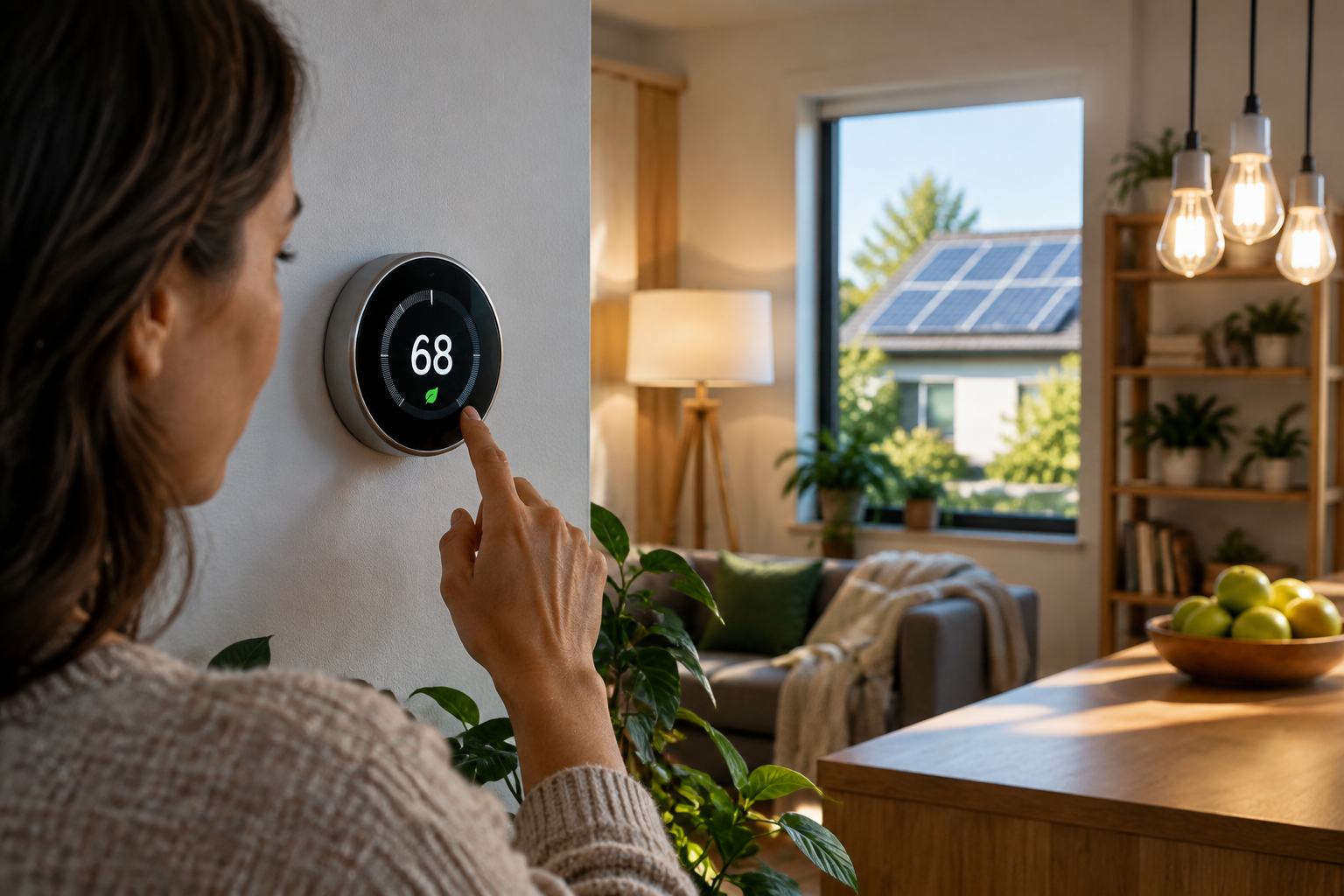
- Use a programmable or smart thermostat if it is compatible with your heating or cooling system and your routine.
- Schedule heating and cooling around occupancy rather than running systems continuously by default.
- Adjust settings gradually and avoid large, unnecessary temperature swings.
- Use zoning where available so unused rooms do not receive the same level of conditioning as occupied rooms.
- Check thermostat placement. It should not be directly exposed to sunlight, drafts, cooking heat or another source that distorts the reading.
Maintain the system
Follow the manufacturer’s maintenance instructions. Clean or replace filters as specified, keep outdoor units unobstructed and arrange qualified servicing when the system shows signs of poor performance, unusual noise or inadequate airflow. A poorly maintained system may provide less comfort while using more energy, although the effect depends on the equipment and its condition.
Reduce heat gain and heat loss
- Seal obvious drafts around doors, windows and service openings where appropriate.
- Use curtains, blinds or external shading to manage sunlight.
- Improve insulation in the roof, loft, walls or floor where a qualified assessment shows it is suitable.
- Do not block necessary ventilation openings or seal areas that require airflow for safety or moisture control.
- Use fans when they can provide comfort without running energy-intensive cooling equipment, but remember that fans cool people rather than the room itself.
Water heating
Hot water can be a significant energy demand, especially in larger households. Consider both the amount of water used and the efficiency of the system that heats it.
- Repair leaks and insulate accessible hot-water pipes where appropriate.
- Use efficient showerheads or flow controls if they provide adequate pressure and are permitted by local plumbing requirements.
- Take shorter showers and avoid running hot water while it is not needed.
- Wash clothes in cooler water when the fabric and detergent allow it.
- Ask a qualified professional to check water-heater settings, safety devices and insulation requirements.
- When replacing a water heater, compare the full operating cost, installation requirements, available space, maintenance needs and expected service life—not only the purchase price.
Appliances and laundry
When an appliance needs replacing, energy performance is only one decision factor. Capacity, repairability, noise, water use, cycle duration, installation requirements and the way your household uses the appliance also matter.
Refrigerators and freezers
- Choose a size that matches your actual needs. A larger appliance may use more energy even when it is efficient for its class.
- Leave enough clearance for ventilation according to the manufacturer’s instructions.
- Check door seals and avoid placing the appliance next to a major heat source where possible.
Washing machines and dishwashers
- Use eco or low-temperature programmes when they meet your cleaning needs.
- Do not overload equipment beyond the manufacturer’s limits.
- Compare both electricity and water information on product labels where available.
- Choose the most suitable cycle instead of automatically selecting the longest or hottest programme.
Ovens and cooking
- Use a microwave, toaster oven, pressure cooker or other small appliance when it is suitable for the task and uses less energy than heating a large oven.
- Keep oven doors closed during cooking as much as practical.
- Defrost food safely in advance when possible, rather than relying on lengthy cooking to thaw it.
Lighting and electronics
Replacing frequently used bulbs with efficient alternatives can be a straightforward improvement. Check compatibility with dimmers, enclosed fixtures and voltage requirements before purchasing. Dispose of lamps according to local guidance, particularly where they contain materials that should not enter ordinary waste.
For electronics, focus on usage time as well as standby power. A television, computer, monitor or games console that remains active for many hours may use more energy during operation than while idle. Use automatic sleep settings, switch off displays when not needed and avoid leaving chargers connected unnecessarily.
Insulation, windows and ventilation
Building improvements can provide lasting benefits, but they should be planned carefully. Insulation, air sealing and window upgrades interact with ventilation and moisture management. Poorly planned work can cause condensation, indoor-air problems or damage to the building.
Questions to ask before upgrading
- Where are the largest sources of heat loss or heat gain?
- Is the building adequately ventilated after air-sealing work?
- Are there existing moisture, dampness or mold concerns that should be addressed first?
- Will the proposed insulation work affect electrical wiring, recessed lights, chimneys or roof ventilation?
- Do local building requirements or property rules apply?
- What maintenance will the improvement require?
A professional energy assessment can help identify priorities, particularly in older or unusual buildings. Ask for an explanation of the recommended work, the assumptions behind any savings estimate and the risks of not addressing related building problems.
Smart meters, monitors and automation
Energy monitors and smart-home controls can make consumption easier to understand, but technology is not automatically a saving. A monitor is most useful when you use its information to change schedules, identify faults or compare the effect of specific actions.
- Check whether the device measures whole-home use or only selected circuits.
- Confirm compatibility with your electrical system, heating equipment and internet connection.
- Review privacy, data-sharing and subscription terms before connecting a device.
- Use automation that reflects real occupancy rather than creating unnecessary heating, cooling or lighting cycles.
- Keep manual controls available for emergencies, maintenance and internet outages.
Renewable energy and major upgrades
Solar panels, heat pumps, battery storage and other technologies may reduce reliance on grid energy, but suitability varies widely. Before making a major investment, assess the building, local weather, roof or site conditions, electrical capacity, maintenance requirements and how much energy is used at different times of day.
Compare proposals on a like-for-like basis. Review equipment specifications, installation work, warranties, exclusions, expected maintenance, replacement components and what happens if the system underperforms. Avoid treating projected savings as guaranteed results; outcomes depend on installation quality, weather, usage and energy prices.
Renters: energy-saving options without major alterations
Renters can often make meaningful improvements without changing the building permanently:
- Use removable draft excluders or window coverings where permitted.
- Choose efficient lamps and appliances for items you control.
- Use thermostat schedules and report heating, cooling, hot-water or window problems to the landlord or property manager.
- Ask before installing fixtures, smart controls, insulation products or equipment that affects wiring or plumbing.
- Document persistent drafts, leaks or inadequate heating so maintenance requests are clear and specific.
How to choose between energy-saving measures
When several improvements are possible, consider more than the advertised saving.
- Upfront cost: Include equipment, installation, permits, accessories and any required building work.
- Operating cost: Consider electricity, fuel, water, servicing and consumables.
- Frequency of use: A measure affecting a frequently used appliance may matter more than one affecting a rarely used item.
- Comfort and convenience: A change that is difficult to use may not deliver its expected benefit.
- Durability and repair: Check warranty terms, spare parts and likely maintenance.
- Safety and compatibility: Electrical, gas, ventilation, plumbing and structural work may require qualified professionals.
- Reversibility: Renters and people planning to move may prefer portable or low-commitment measures.
- Timing: Coordinate upgrades with planned renovations or the replacement of failed equipment.
A practical 30-day action plan
- Week 1: Review bills, note heating and cooling habits, and identify devices that run continuously.
- Week 2: Address simple actions such as thermostat schedules, standby power, blocked vents, lighting and laundry settings.
- Week 3: Check for drafts, leaks, damaged seals and maintenance needs. Ask the landlord, utility or a qualified technician about issues outside your control.
- Week 4: Choose one larger improvement to investigate. Obtain comparable information and check installation, safety and maintenance requirements before committing.
Practical questions to ask before spending money
- What problem is this product or upgrade intended to solve?
- How often will it be used, and what is the likely energy impact in my situation?
- Does the quoted cost include installation, controls, disposal and follow-up work?
- Will it work with my existing wiring, plumbing, heating system or building structure?
- What happens if the expected performance is not achieved?
- Who will maintain it, and are replacement parts readily available?
- Would a smaller, simpler or less expensive measure address the same problem?
Frequently asked questions
What is the fastest way to save energy?
Start by reducing unnecessary operating time: adjust heating and cooling schedules, switch off unused equipment, use suitable laundry and dishwasher cycles, and address leaks or blocked filters. The best first step depends on which systems consume the most energy in your home.
Are smart plugs and smart thermostats always worth buying?
No. They can help when they control equipment that is often left running or when schedules are otherwise difficult to manage. Their value depends on purchase cost, compatibility, standby use, reliability and whether the controls actually change your routine.
Should I replace an appliance that still works?
Not necessarily. Replacing a working appliance creates a purchase and disposal cost. Consider replacement when the appliance is inefficient, unreliable, expensive to repair or nearing the end of its useful life. Compare the likely operating-cost difference with the full replacement cost.
Can closing vents in unused rooms save energy?
It depends on the heating or cooling system. Closing vents or radiators may reduce comfort or interfere with system balance in some buildings. Follow the equipment guidance and seek professional advice if you are unsure.
Do energy-saving actions make a home less comfortable?
They should not when planned well. Draft control, better scheduling, maintenance and appropriate insulation can improve comfort. Avoid extreme settings or blocking ventilation in an attempt to reduce consumption.
How can I tell whether a claimed saving is realistic?
Ask what baseline was used, which assumptions were made about weather and usage, whether installation costs are included and whether the figure is a guarantee or an estimate. Compare the claim with independent product information and your own energy data where possible.
Final checklist
- Review your energy use before choosing upgrades.
- Reduce unnecessary heating, cooling and standby operation.
- Maintain equipment and keep airflow paths clear.
- Address drafts, leaks and moisture problems carefully.
- Choose appliances based on total ownership needs, not label information alone.
- Check compatibility, safety and maintenance requirements for major work.
- Use professional assessment for complex electrical, gas, structural, insulation or ventilation projects.
Disclaimer: This article provides general information, not professional engineering, electrical, plumbing, building, financial or environmental advice. Energy performance and requirements vary by location, property and equipment. Follow manufacturer instructions and consult appropriately qualified professionals for safety-critical or major work.